
As a New Zealand company owner you can take money out as a shareholder salary, as dividends, or a mix of both. The choice affects your tax, your ACC levies, and how simple your year-end is. Here is how the two compare.
The two options at a glance
Your company is a separate entity, so its profit is not automatically yours, you have to extract it. The two main routes are a shareholder salary and dividends, and most owners use a blend.
| Shareholder salary | Dividends | |
|---|---|---|
| What it is | Pay for your work in the business | A distribution of company profit to shareholders |
| Taxed at | Your personal marginal rates | Your personal rate, with imputation credits attached |
| ACC levies | Generally apply | Generally do not apply |
| Flexibility | Set during the year or at year-end | Declared from available profit |
The company itself pays tax at 28% on its profit. How you then take that money out determines the rest of the tax, and the levies, that apply to you personally.
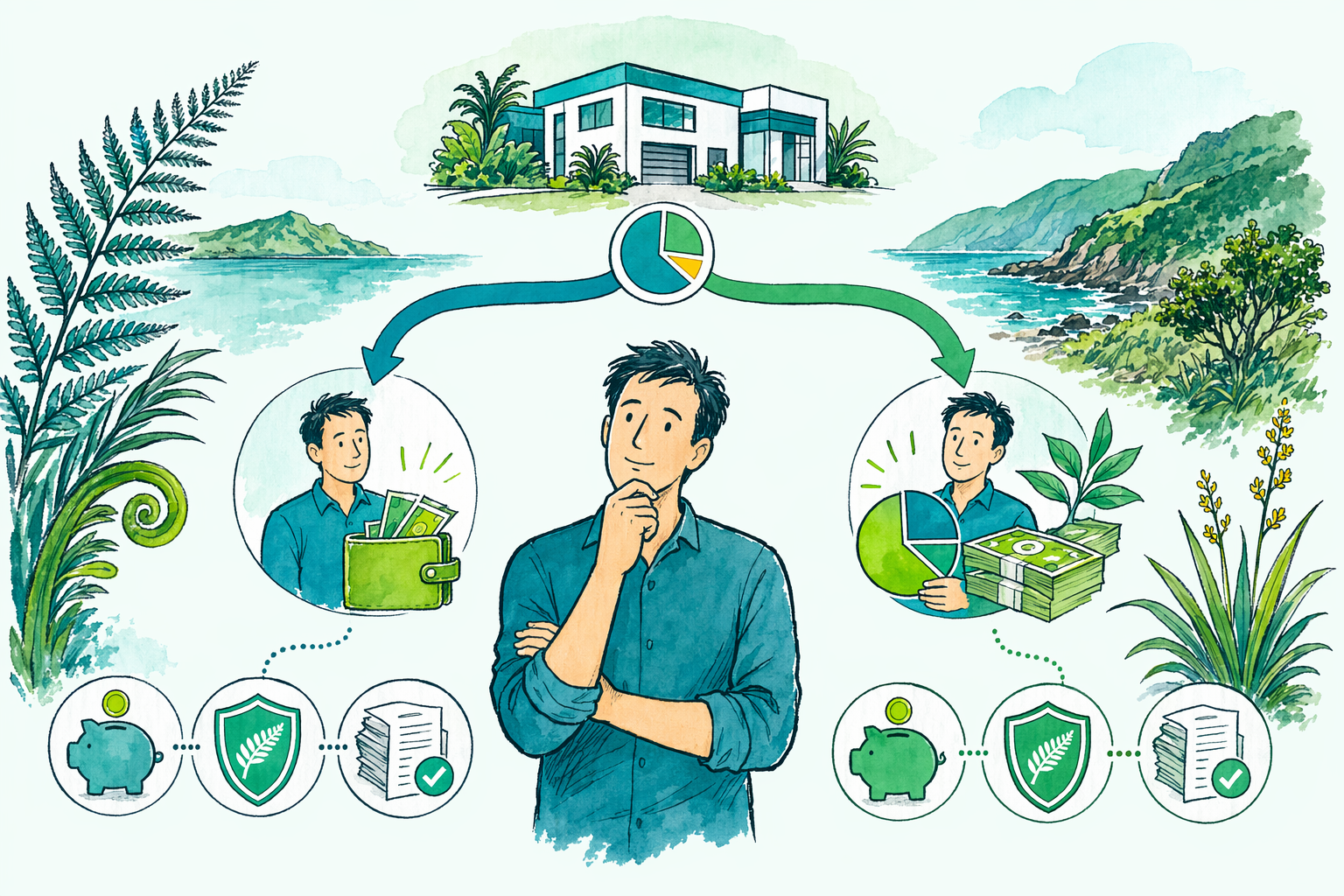
Tax treatment compared
The two routes interact with the company's 28% tax differently.
- Shareholder salary: the company deducts the salary before calculating its profit, so it reduces company tax. You then pay tax on that salary at your personal marginal rates. It is effectively income taxed in your hands.
- Dividends: paid from profit the company has already taxed at 28%. To avoid taxing the same money twice, dividends carry imputation credits for that company tax. You pay any difference between 28% and your personal rate (topping up if your rate is higher, with a credit if it is lower).
The practical effect: salary shifts profit straight to your personal return at your marginal rate, while dividends pass through already-taxed profit with credit for the 28% already paid. The best mix depends heavily on your personal income level and how much profit the company is retaining.
A quick word on imputation credits, since they do the heavy lifting here. When your company pays 28% tax on profit, it banks a credit for that tax. When it later pays you a dividend, it can attach those credits, so you are not taxed a second time on money the company already paid tax on. If your personal rate is above 28%, you top up the difference; if it is below, you may even receive a credit. Getting the imputation account right is what keeps dividends efficient rather than double-taxed.
Cost and cashflow
Beyond income tax, the big cashflow difference is ACC.
- Salary generally attracts ACC levies, which fund your cover for work-related injury. That is a real cost, but it also buys you genuine protection if you are hurt and cannot work.
- Dividends generally do not attract ACC levies, which can make them cheaper on paper, but taking everything as dividends can leave you under-covered by ACC.
So the cheapest-looking option is not automatically the wisest. A salary that triggers ACC also gives you cover; dividends that skip ACC also skip that safety net. Many owners deliberately take some salary partly to maintain sensible ACC cover, then use dividends for the rest.
Risk and admin
The two routes carry different paperwork and different traps.
- Salary admin: a shareholder salary can often be set at year-end as part of finalising the accounts, which gives useful flexibility, but it has to be properly documented and the tax accounted for.
- Dividend admin: dividends must be paid from genuinely available profit, with the imputation credits tracked in the company's imputation account. Get the imputation wrong and you can end up taxing income twice or facing a shortfall.
- Overdrawn shareholder accounts: a common trap is drawing money through the year without classifying it. Left unaddressed, an overdrawn current account can create its own tax issues at year-end.
This is an area where a tidy year-end process really pays off, because the salary-versus-dividend split is usually best finalised with full-year figures in front of you.
Which suits which owner
As a general guide:
- More salary suits owners who want straightforward ACC cover, who have lower personal income (where their marginal rate is below 28%), and who like the simplicity of being paid like an employee.
- More dividends suit owners whose company is retaining and distributing already-taxed profit, and who want to avoid ACC on amounts that are genuinely a return on the business rather than pay for work.
- A blend suits most owner-operators: enough salary for sensible ACC cover, dividends for the remainder, balanced against personal income levels.
The right split is genuinely numbers-driven and changes year to year as your profit and personal income move. It is one of the most common things we model for company-owner clients.
In practice, the most common outcome for an owner-operator is a deliberate blend, taken with full-year figures in front of you: enough salary to keep sensible ACC cover and use up lower personal tax brackets, then dividends for the rest, carrying their imputation credits. The exact split shifts each year with your profit and your other income, which is why it is worth revisiting at every year-end rather than setting once and forgetting.
Talk it through with us
Salary versus dividends is rarely all-or-nothing, the sweet spot is usually a mix, and that mix depends on your profit, your personal income, and how much ACC cover you want. We will run the numbers for your situation and recommend a split that is tax-efficient without leaving you exposed.
Book a free review and we will work out the right balance with you, in plain English.
This is general information only, current at the time of writing, and not personalised tax advice. Your situation may differ. Confirm the detail with us or check ird.govt.nz before you act.
In plain English: salary is taxed at your personal rate and usually carries ACC levies and cover; dividends pass out already-taxed profit with imputation credits and usually skip ACC, so most owners take a deliberate mix of both.
This is general information, not personalised tax advice.See our full disclaimer.