
Ring-fencing means a loss on your residential rental can't be used to reduce the tax on your salary or other income. Instead it's parked and carried forward. Here's how the rule works and what it means for your return.
What ring-fencing means
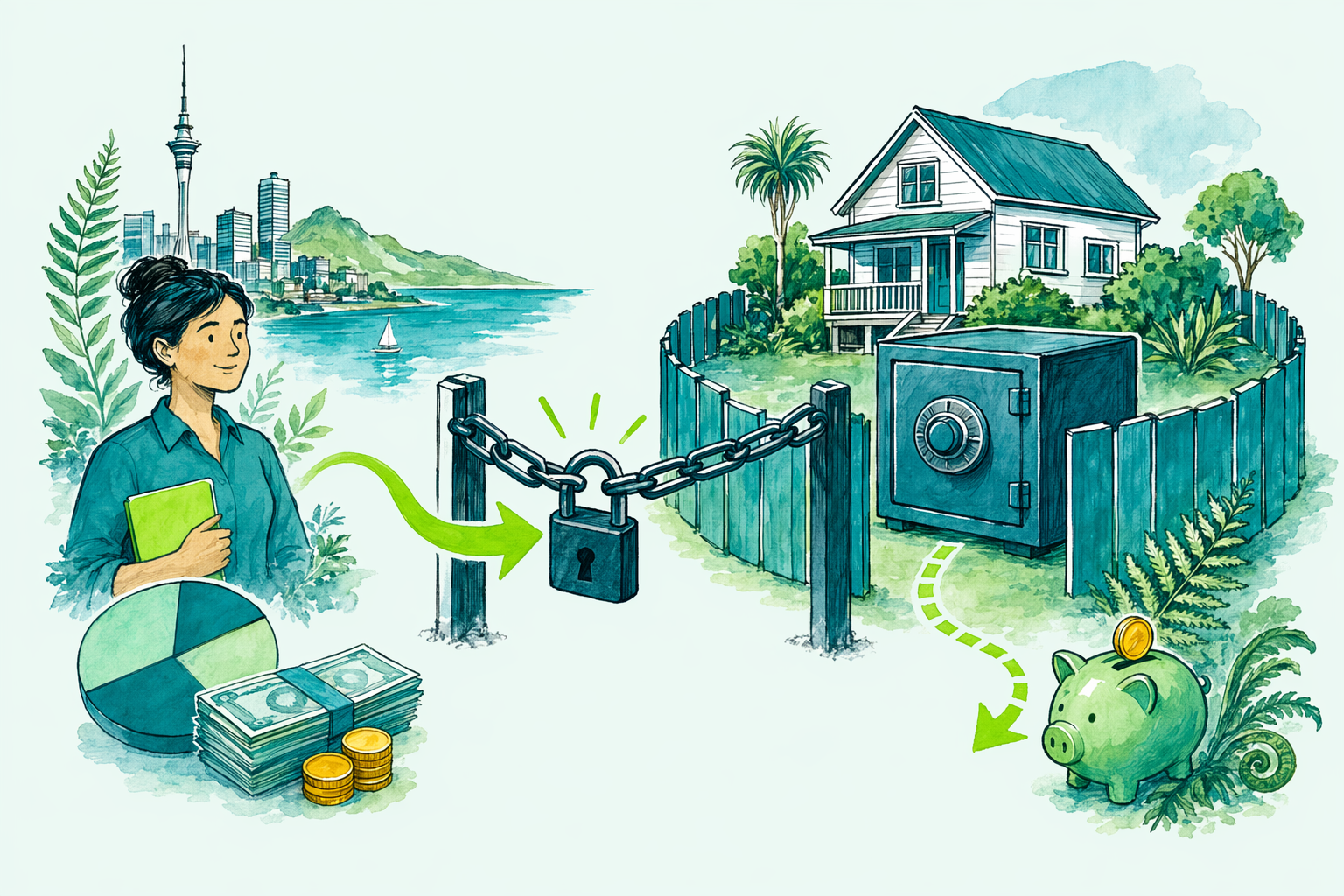
Ring-fencing draws a fence around your residential rental activity. Any loss it makes has to stay inside that fence. It can't escape to reduce the tax on income that comes from outside, like your wages, your business profit, or your investments.
A rental makes a loss when its deductible costs (rates, insurance, interest, maintenance, management fees, depreciation on chattels) add up to more than the rent it brings in. Before the rules changed, you could use that loss to lower your overall taxable income, which is the strategy behind "negative gearing". Ring-fencing ended that for residential property.
The loss isn't gone. It's quarantined and carried forward, waiting to be used against future income from your rentals. So the benefit is deferred rather than denied: you get to use the loss eventually, once your rental activity is in profit, just not against your day-job income in the meantime. That single change reshapes the maths of owning a residential rental, which is why it surprises so many investors at their first tax time.
Why you can't offset losses against salary
This is the practical heart of the rule, and the bit that catches people out. Say you earn a salary and also own a rental that runs at a loss. Intuitively you might expect that loss to reduce the tax on your salary, generating a refund. Under ring-fencing, generally it can't.
| Income | Before ring-fencing | Now |
|---|---|---|
| Salary $80,000 | Taxed on $80,000 | Taxed on $80,000 |
| Rental loss $10,000 | Offset, so taxed on $70,000 | Ring-fenced, carried forward |
| Taxable income | $70,000 | $80,000 |
In the "before" world, the $10,000 loss cut the salary tax. In today's world, the salary is still taxed in full, and the $10,000 rental loss is set aside for later use against rental income. The refund people used to count on simply doesn't appear, which is the moment many landlords first hear the words "ring-fencing" from their accountant.
The reasoning behind the policy was to stop residential property losses being used to lower tax on unrelated income. Whatever you think of it, the practical takeaway is clear: don't budget for a tax refund from a negatively-geared residential rental.
Portfolio vs property-by-property basis
If you own more than one rental, how the fence is drawn matters. There are two ways the rules can apply ring-fencing, and the default suits most investors better.
- Portfolio basis (the usual default): all your residential rentals are treated as one pool. A loss on one property can offset the profit on another in the same year, and only the net loss across the portfolio is ring-fenced and carried forward.
- Property-by-property basis: each property is fenced separately, so a loss on one can't offset a profit on another. This is generally less favourable and applies in particular situations.
For most landlords the portfolio basis is the better outcome, because a loss-making property and a profit-making one can net off within the year, reducing the amount that has to be carried forward. Getting the basis right, and applying it consistently, is part of preparing a multi-property return correctly. If you hold several rentals, it's worth making sure your return is using the basis that genuinely fits your situation.
Carrying losses forward
A ring-fenced loss isn't a write-off, it's a credit you bank for the future. Each year your rental runs at a loss, that loss is added to a running balance carried forward. In a year your rentals turn a profit, the accumulated losses are used to soak up that profit before any tax applies.
So the loss does its job eventually, it just waits until there's matching rental income to use it against. Over time, as rents rise or your mortgage reduces, rentals often move from loss to profit, and that's when the carried-forward losses come into play and shelter the new profit.
- Losses accumulate year on year while the rental is in deficit
- They're used against future rental income, not against salary or business income
- The balance follows your portfolio forward until it's used up
The crucial practical point is tracking. Carried-forward losses have to be recorded accurately and rolled correctly from one return to the next, or you risk losing the benefit of legitimate losses simply because they weren't kept on the books properly. This is one of the quiet jobs a good rental return does every year. This is general information; confirm your situation with us or check ird.govt.nz.
Exclusions and exceptions
Ring-fencing is aimed squarely at residential rental property, so several things sit outside the fence. Knowing the boundaries stops you applying the rule where it doesn't belong.
Generally not ring-fenced:
- Your main home, which isn't a rental at all
- Commercial property, which falls outside the residential rules
- Land subject to the bright-line test or held on revenue account in certain cases, where different treatment applies
- Property that is part of a wider business in some circumstances, such as certain mixed-use or business premises
The line between residential and non-residential can be less obvious than it looks, particularly with mixed-use properties, short-stay accommodation, or a home with a self-contained rental flat. These are exactly the situations where assuming the rule applies (or doesn't) can lead to a wrong return.
The safe approach is to confirm how your specific property is categorised before you file, rather than assume. If you're unsure which side of the fence your property sits, that's a good thing to check with us. Our service page on rental property and investor tax covers the wider picture.

A simple worked example
Numbers make this concrete. Imagine Aroha earns a $90,000 salary and owns one residential rental. For the year, the rental brings in $24,000 of rent but costs $30,000 to run once rates, insurance, interest, maintenance, and chattels depreciation are counted.
| Item | Amount |
|---|---|
| Rental income | $24,000 |
| Rental expenses | $30,000 |
| Rental loss | $6,000 |
That $6,000 loss is ring-fenced. Aroha is still taxed on her full $90,000 salary, with no offset this year, and the $6,000 is carried forward.
Now jump to a later year. Rents have risen and the mortgage is lower, so the rental makes a $4,000 profit. Aroha's carried-forward $6,000 loss is applied: it wipes out the $4,000 profit (so no tax on the rental that year), and $2,000 of loss still carries forward to the next year. The loss did its job, just later and only against rental income.
That's ring-fencing in a nutshell: losses banked now, used against rental profit later, never against salary. Our standalone worked example page spells out a fuller version.
This page is general information only, not personalised tax advice. Your situation may differ, so book a free review to talk it through. In plain English: a loss on your residential rental can't cut the tax on your wages, it's parked and carried forward to use against future rental profit, so don't bank on a refund from negative gearing.
This is general information, not personalised tax advice.See our full disclaimer.