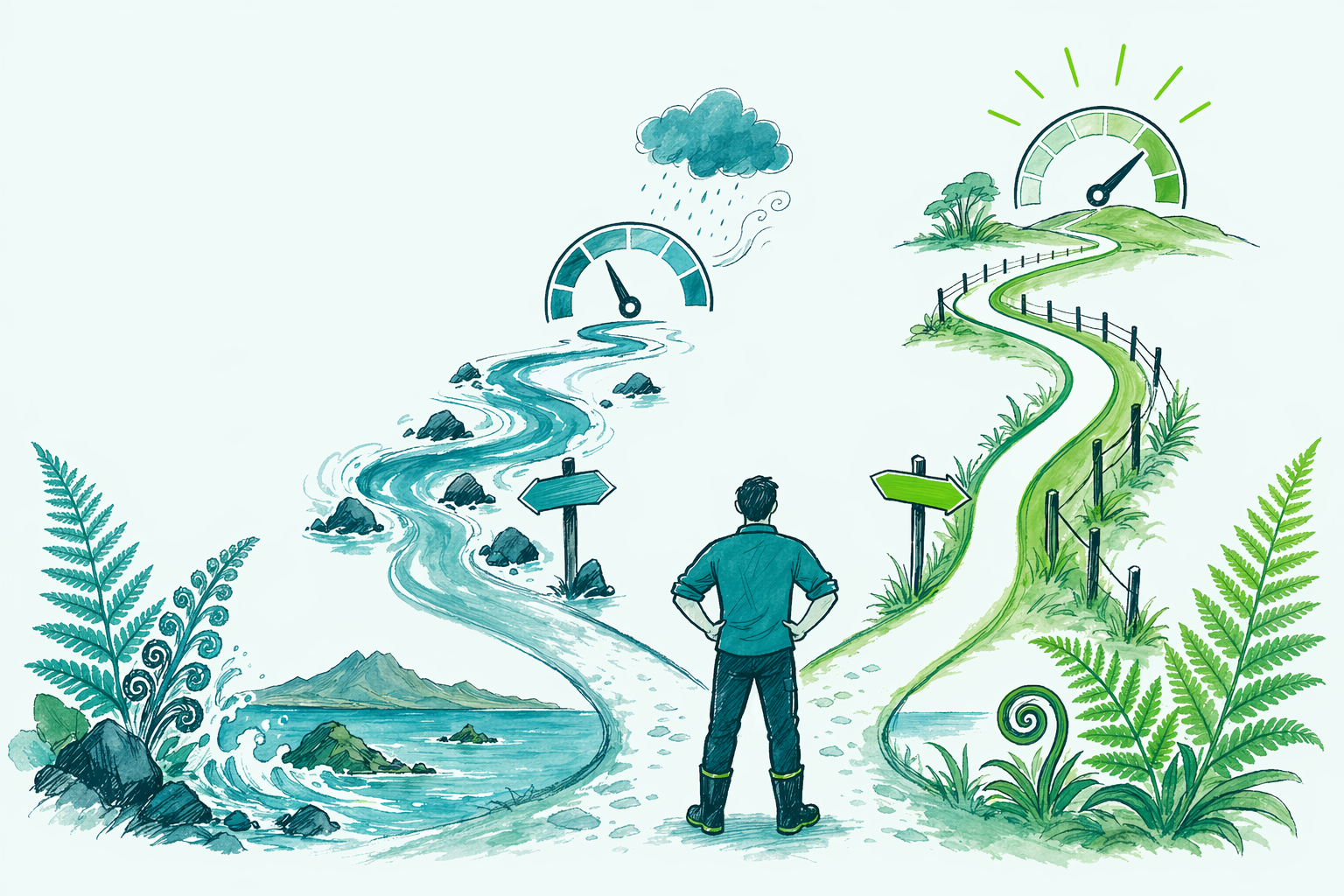
Provisional tax is how New Zealand collects income tax in instalments through the year, and you can pay it the standard way or via the Accounting Income Method (AIM). Here is how the two compare on cashflow, accuracy, and admin.
The two options at a glance
Both methods spread your income-tax bill across the year instead of one lump sum. The difference is whether you pay based on last year's result or on this year's actual profit as it happens.
| Standard method | AIM | |
|---|---|---|
| Based on | Last year's tax, uplifted | This year's actual profit, in real time |
| Payments | Usually 3 instalments | Aligned with your GST returns |
| Needs software? | No | Yes, AIM-capable software |
| Best when | Income is steady and predictable | Income is lumpy, new, or growing |
The standard method is the default and the simplest. AIM is newer, software-driven, and shines when your income is uneven or hard to forecast, because you only pay tax on profit you have actually made.
Tax treatment compared
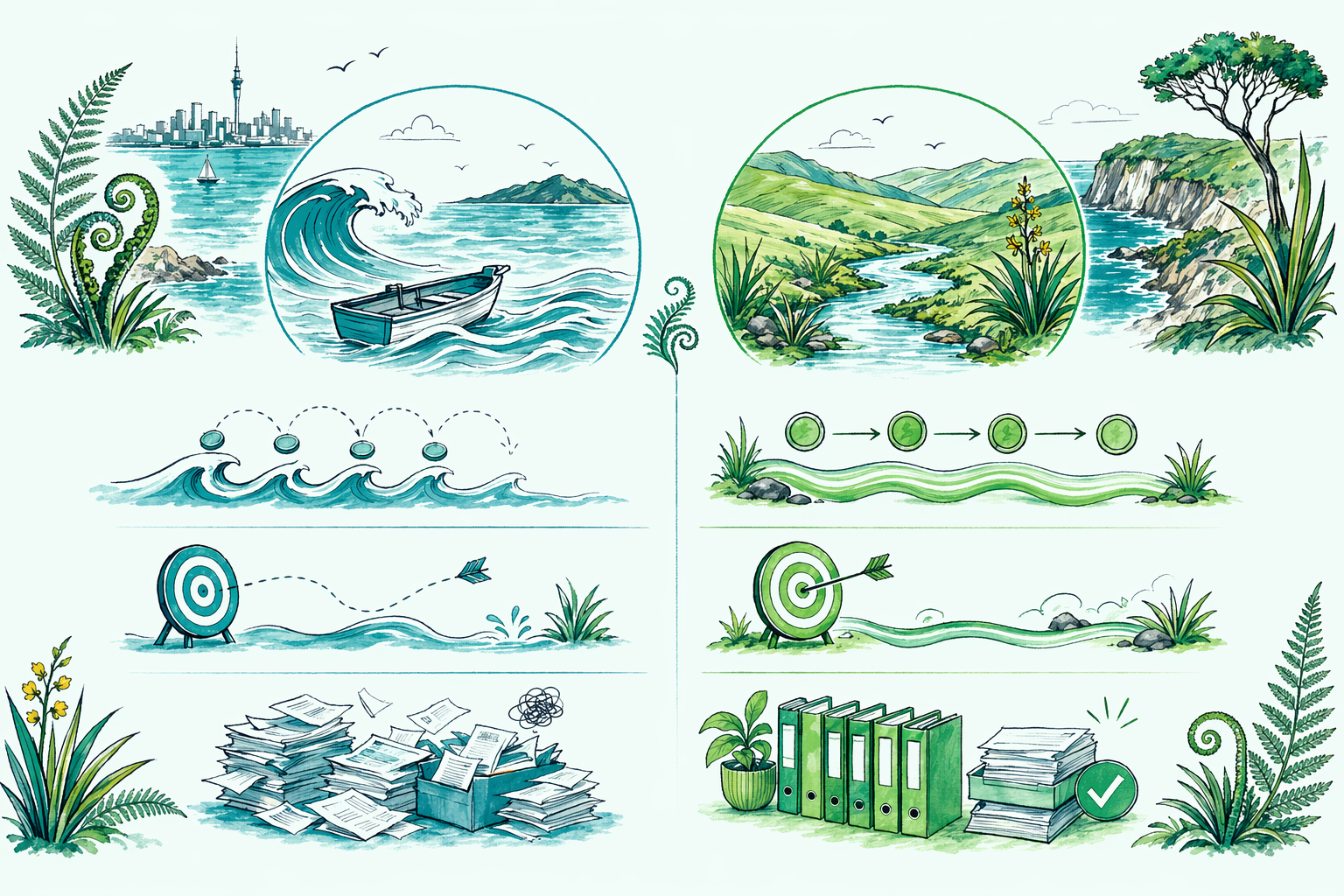
Both methods settle the same final tax bill, they just take the instalments along different paths.
- Standard method: IRD takes your previous year's residual income tax, adds an uplift, and divides it into instalments (commonly three). It is predictable but backward-looking, so it ignores how this year is actually going.
- AIM: your accounting software calculates tax on your actual year-to-date profit at each filing point, so payments rise and fall with how the business is really performing. A loss-making period can mean no payment due.
There is also safe-harbour relief under the standard method: if you meet the conditions and pay your assessed instalments on time, you are generally protected from use-of-money interest until the final balance is due. AIM sidesteps that concern differently, by keeping payments close to real profit, so under- and over-payments stay small.
It helps to know the term IRD uses: residual income tax is essentially your tax bill for the year after credits. If it crosses the provisional-tax threshold, you are brought into provisional tax for the following year. The standard method then bases your instalments on that prior-year figure (with an uplift), which is why a year of strong growth can leave you under-provided, and a year of decline can leave you over-paying and waiting for a refund.
Cost and cashflow
This is where the two genuinely differ for your bank account.
- Standard method: three larger instalments on fixed dates. Predictable, but if last year was strong and this year is weaker, you can over-pay and wait for a refund.
- AIM: smaller, more frequent payments that track your actual profit. In a quiet period you pay less; in a strong one you pay more. Cashflow stays closely aligned with reality, which suits new and seasonal businesses.
The trade-off is that AIM requires you to keep your accounting software genuinely up to date, because it calculates from live figures. Standard works fine even if your bookkeeping is only tidied up at year-end.
Risk and admin
Admin and risk pull in opposite directions for these two.
- Standard method: low admin, three dates to remember. The risk is paying on stale figures, over-paying when the business slows, or under-paying and facing use-of-money interest if you grow faster than last year.
- AIM: higher day-to-day admin (your books must be current every filing period) but lower risk of a nasty surprise, because payments follow actual profit. It also generally keeps you clear of use-of-money interest on the provisional side, since you are paying close to what you owe as you go.
If your records are always tidy and you are using capable software, AIM's admin cost is small. If your bookkeeping tends to lag, the standard method's simplicity is the safer choice.
Which suits which owner
As a general guide:
- Standard method suits established businesses with steady, predictable income, and owners who keep their books light through the year and tidy them at year-end.
- AIM suits new businesses with no prior-year figure to base instalments on, seasonal or lumpy incomes, fast-growing businesses, and anyone who already keeps their software bang up to date.
A common pattern: new businesses start on AIM to avoid over- or under-paying in year one, then move to the standard method once income settles into a predictable rhythm. Neither is permanently 'better', they suit different stages.
A worked example: a brand-new business has no prior-year residual income tax to base standard instalments on, which can make the first year awkward. AIM solves that neatly, because it calculates from this year's actual profit as it accrues, so a quiet start means small payments and a strong finish means larger ones, all in step with reality. Once the business has a settled track record, many owners move to the standard method for its simplicity.
Talk it through with us
Picking a provisional-tax method is really a cashflow decision dressed up as a tax one. We will look at how steady your income is, how current your records are, and what software you use, then recommend the method that keeps your payments sensible and your surprises to zero.
Book a free review and we will walk through it together, plainly.
This is general information only, current at the time of writing, and not personalised tax advice. Your situation may differ. Confirm the detail with us or check ird.govt.nz before you act.
In plain English: the standard method pays in a few fixed instalments based on last year, while AIM pays smaller amounts tracking this year's actual profit, better for new, lumpy, or growing incomes if your books stay current.
This is general information, not personalised tax advice.See our full disclaimer.