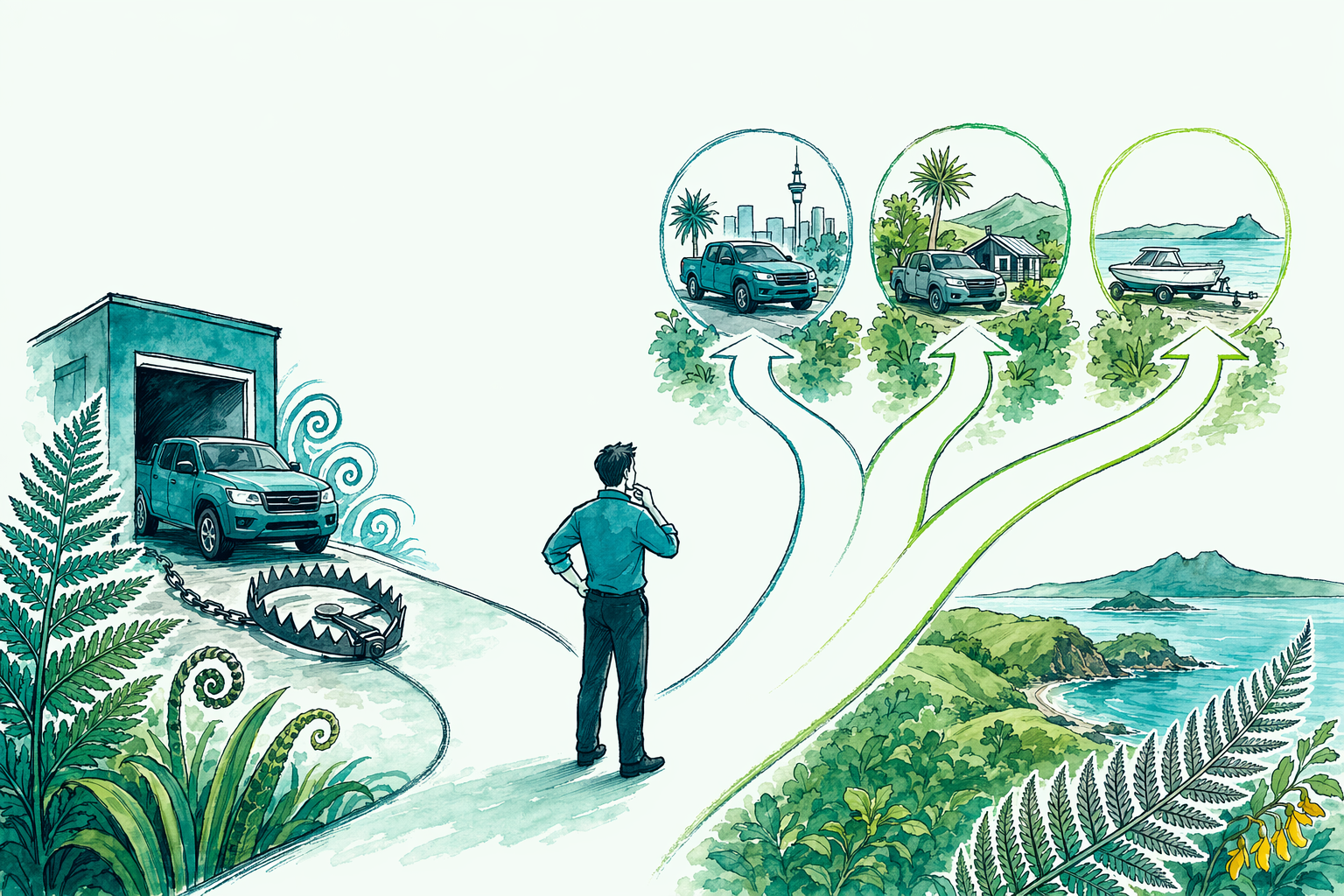
Putting a vehicle through your company sounds like an easy win, but it opens the door to fringe benefit tax. There are three sensible routes, and the right one depends on how the vehicle is actually used.
Quick answer
When a company owns a vehicle that an owner or employee can use privately, that private availability is a fringe benefit and usually attracts FBT. You generally have three options: pay FBT on the company vehicle, claim a deduction for business mileage on a personally-owned vehicle instead, or qualify the vehicle as an exempt work-related vehicle. The cheapest route depends on how much genuine private use there is.
The three routes, compared
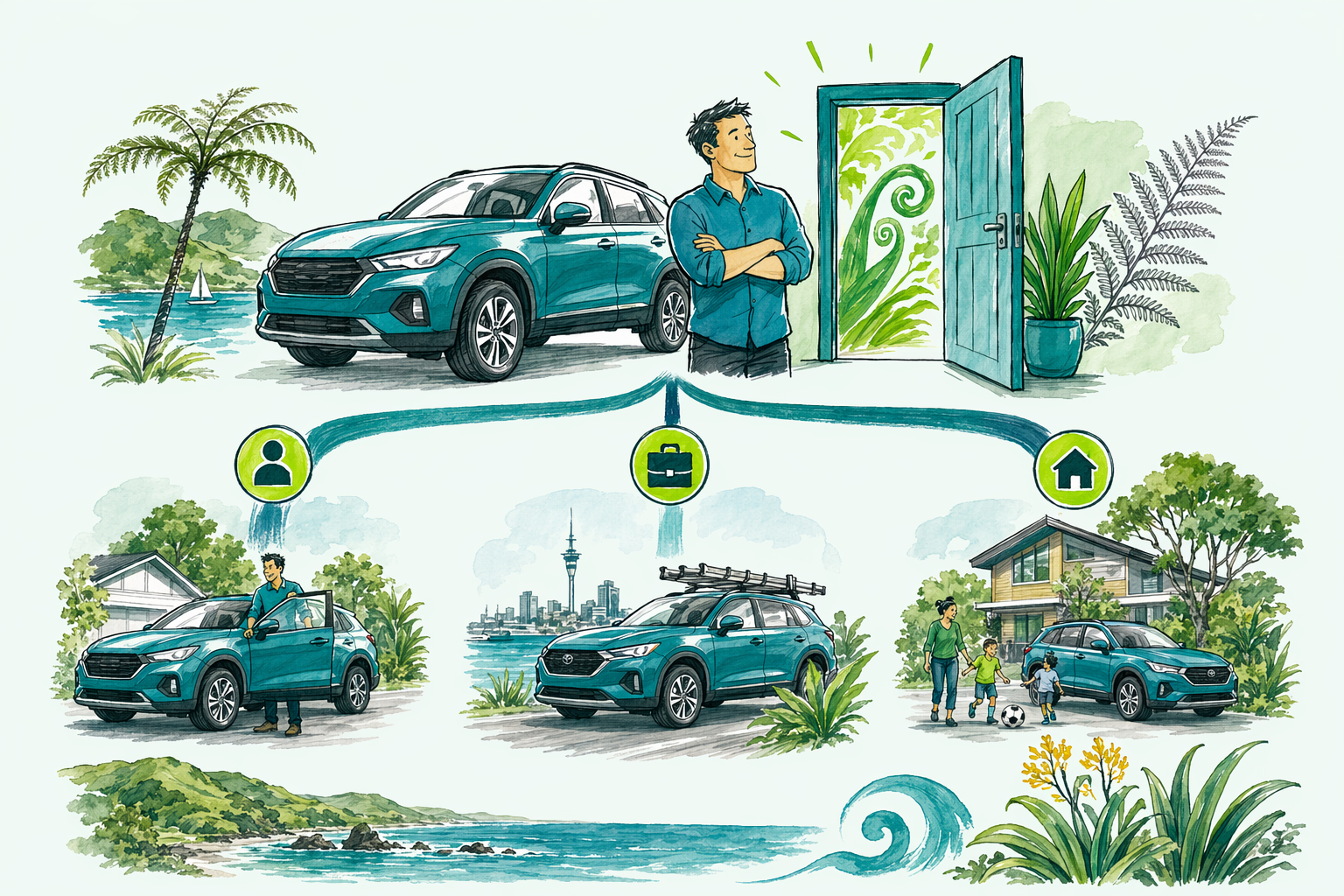
Think of it as a choice, not a default. Each option suits a different pattern of use.
- Company vehicle + FBT. The company owns and runs the vehicle and deducts the running costs, but pays FBT on the value of private availability. Good when business use is high and you want the company to carry everything.
- Personal vehicle + mileage claim. You own the vehicle and the company reimburses or you claim business kilometres using the kilometre-rate method, backed by a logbook. No FBT, and often simpler for low-to-moderate business mileage.
- Work-related vehicle exemption. A genuine work vehicle (typically a ute or van) that is sign-written, not available for general private use, and supported by a written restriction can be exempt from FBT. The rules are specific and home-to-work travel needs care.
The exemption is the one people most often claim incorrectly. A double-cab ute parked at home and used for the weekend is not automatically exempt.
A simple comparison
A one-person company is deciding how to handle the director's vehicle, used about 70% for business:
| Route | What happens |
|---|---|
| Company vehicle + FBT | Company deducts all running costs but pays FBT on private availability |
| Personal vehicle + mileage | Claim ~70% of kilometres at the kilometre rate, no FBT |
| Work-related vehicle | Only if it is a genuine sign-written work vehicle with a written private-use restriction |
For a single car with meaningful private use, the mileage route is often cleaner and cheaper than carrying the car in the company and paying FBT. For a fleet or a true work ute, the other routes can win.
Common mistakes to avoid
- Assuming a ute is automatically FBT-free. The work-related vehicle exemption has real conditions, including signage and a written restriction.
- Claiming 100% business use of an only car. If it is your only vehicle, some private use is almost certain and must be accounted for.
- No logbook. The mileage method needs records IRD will accept.
- Forgetting FBT filing. If you carry a company vehicle with private availability, FBT returns are part of the deal.
Where this fits in your return
If you carry the vehicle in the company, FBT is filed on its own cycle alongside your company accounts and IR4. The broader fringe-benefit rules are covered on our FBT explainer, and the vehicle-specific detail sits on our FBT on vehicles guide.
How Fernway can help
We run the numbers on all three routes for your actual usage, tell you which is cheapest, set up the records you need (logbook or FBT calculations), and handle the FBT returns if the company vehicle route wins. No guesswork, and a fixed fee agreed before we start.
If you are about to buy a vehicle through the company, book a free 20-minute review first so we can structure it correctly.
This is general information only, not personalised tax advice. Confirm your situation with us or check ird.govt.nz.
In plain English: a company car with private use usually means FBT, so weigh it against simply claiming business mileage on your own vehicle, and only treat a ute as exempt if it genuinely meets the work-vehicle rules.
This is general information, not personalised tax advice.See our full disclaimer.