
The IR3 is where your whole tax year comes together. Knowing exactly which income belongs on it (and which is already taxed at source) is the difference between a clean return and an IRD letter asking about the bit you left off.
Quick answer
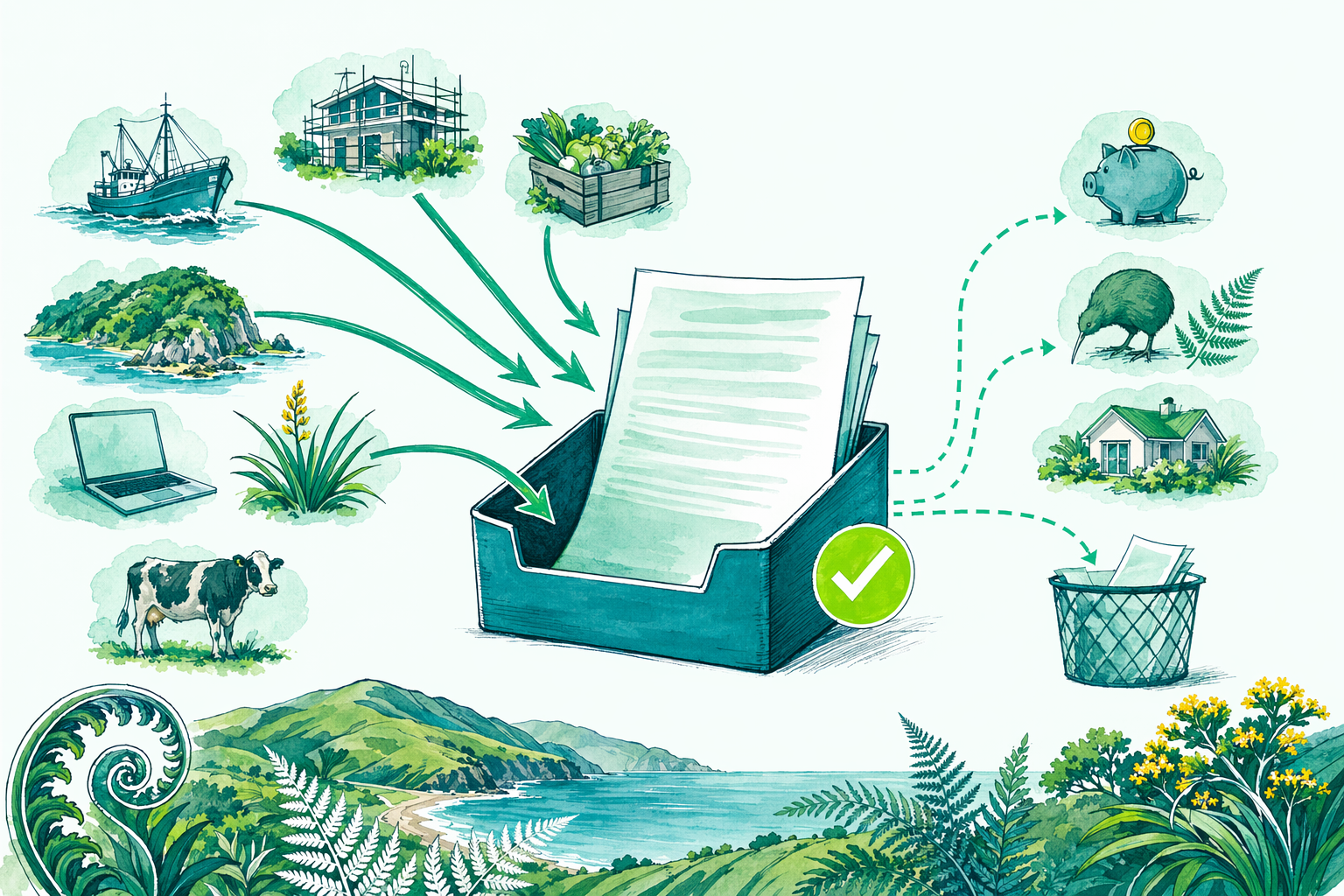
Your IR3 is the individual income tax return for anyone whose income is not fully taxed at source — sole traders, contractors, landlords, investors and people with overseas income. On it you declare all of your taxable income for the year, then claim your expenses and credits to reach the final figure.
Some income is already taxed before it reaches you (such as salary under PAYE or interest with RWT deducted) but it still usually needs to go on the return so the totals are right. Other income has had nothing withheld and is entirely your responsibility to declare.
The detail, in plain English
It helps to split your income into what is taxed at source and what is not.
Income that usually has tax already taken out (but still appears on the return):
- Salary and wages under PAYE.
- Interest with resident withholding tax (RWT) deducted.
- Dividends with imputation and RWT credits.
- Schedular payments with withholding tax deducted.
Income where nothing has been withheld (you must declare and pay):
- Self-employed and business profit (after expenses).
- Rental income, after deductible costs and subject to ring-fencing.
- Overseas income, including foreign pensions and foreign investment income.
- Some investment income such as crypto gains.
The reason even pre-taxed income goes on the return is that your final tax depends on your total. Combining a salary with side income can change the rate that applies to the top slice, so the IR3 reconciles everything and works out whether you owe more or are due a refund.
A practical way to make sure nothing slips is to think about every account money lands in over the year, not just your main business one. A second bank account, an investment platform, a rental agent's statement, an overseas pension and a crypto exchange are all places taxable income can appear without ever passing through your business books. The IR3 wants the lot.
A simple example
Consider someone with a day job and a side business:
| Income source | Amount | Tax already withheld? |
|---|---|---|
| Salary (PAYE) | $65,000 | Yes |
| Side-business profit | $18,000 | No |
| Bank interest (RWT) | $600 | Yes |
All three go on the IR3. The $65,000 and $600 already had tax taken out, but the $18,000 of business profit has had nothing withheld, and because it stacks on top of the salary it is taxed at the higher slice. That is the amount most likely to create an end-of-year bill, and to push the person into provisional tax for next year.
Common mistakes to avoid
- Leaving off income that was taxed at source. It still belongs on the return so the totals reconcile.
- Forgetting overseas income. Tax residents are generally taxed on worldwide income, not just NZ income.
- Reporting gross instead of net business income. Claim your expenses so you are taxed on profit, not turnover.
- Missing one-off income. Crypto gains, a taxable property sale, or contract work can all be overlooked.
Tax residency is the sleeper here. If you are a NZ tax resident, you are generally taxed on your worldwide income, so a foreign salary, an overseas rental or a pension from another country belongs on the return even though no NZ tax was taken out at source. Leaving foreign income off is one of the more common reasons an otherwise tidy return draws an IRD query.
Where this fits in your return
The IR3 is the return itself, so everything fits here. Once your total income and expenses are in, the return calculates your tax, credits the amounts already withheld, and produces a refund or a bill. The filing deadline is generally 7 July, later if you are linked to a tax agent.
For sole traders, this connects directly to the individual and sole-trader return service.
How Fernway can help
We gather every income source, make sure nothing is missed and nothing is double-counted, claim the expenses and credits you are entitled to, and reconcile the lot into a clean IR3. If you have a mix of salary, side income, rental and overseas money, we make the combination behave.
Book a free 20-minute review and we will map out exactly what belongs on your return.
This is general information only, not personalised tax advice. Your situation may differ, so confirm it with us or check ird.govt.nz.
In plain English: the IR3 captures all of your income for the year, even the bits already taxed at source, because your final tax depends on the total — and the income with nothing withheld is the part that usually creates the bill.
This is general information, not personalised tax advice.See our full disclaimer.