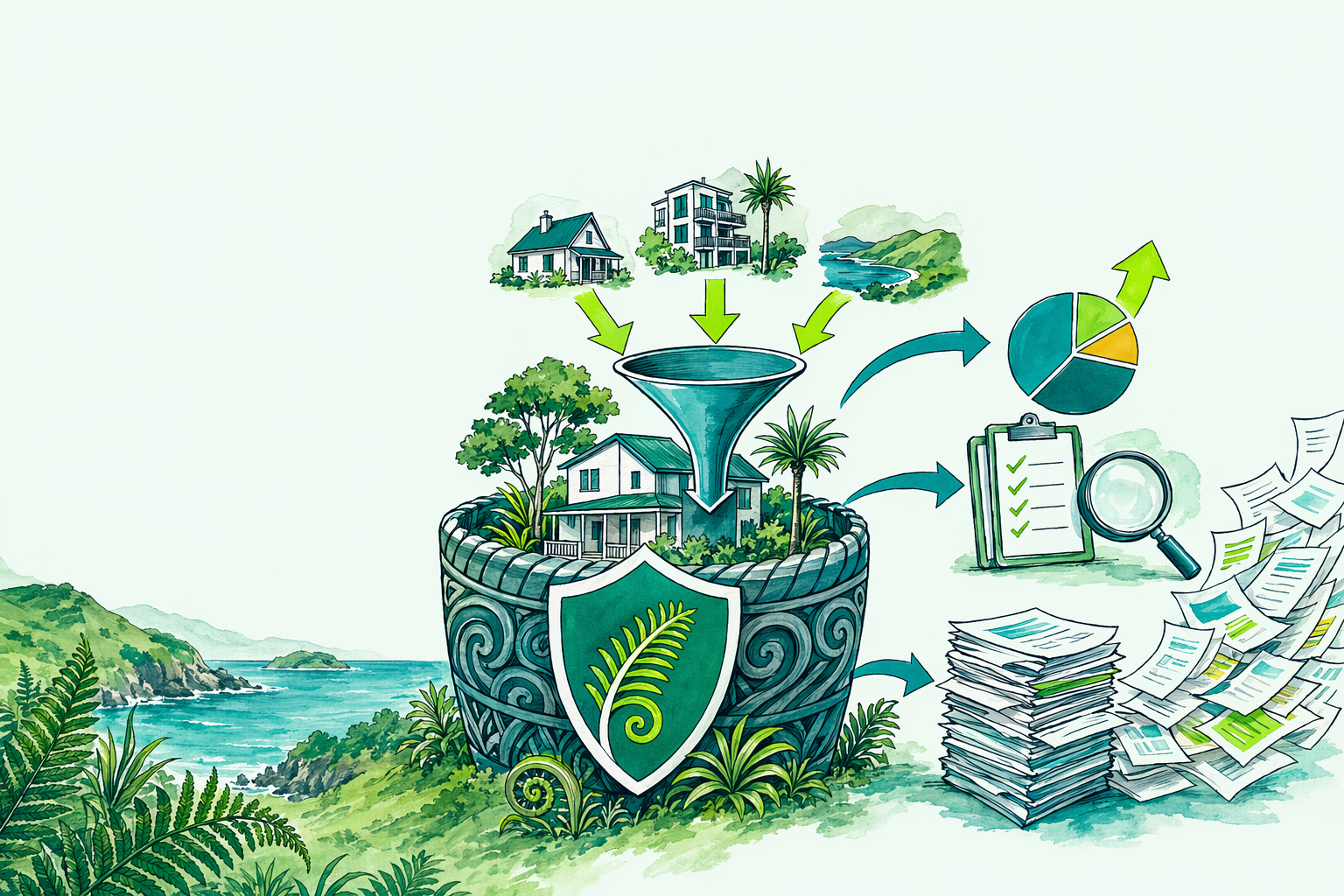
Trusts are common in New Zealand for holding family assets and rentals, but they come with their own return, a higher trustee tax rate, and far more disclosure than they used to.
Quick answer
A trust files an IR6 return each year. Income kept in the trust (trustee income) is taxed at the trustee rate, now 39%, while income paid out to beneficiaries (beneficiary income) is taxed in their hands at their own personal rates. Most income-earning trusts also face detailed disclosure obligations to IRD on top of the return.

The detail, in plain English
A trust is not taxed quite like a person or a company. Each year the trustees decide how the income is treated, and that decision drives the tax.
- Trustee income is income the trust retains. It is taxed at the flat trustee rate of 39%. A small de minimis rule means trusts with trustee income at or below a modest threshold can still be taxed at 33%, which helps very small trusts.
- Beneficiary income is income allocated to a beneficiary within the allowed timeframe (broadly, by the time the return is due). It is taxed at that beneficiary's personal rate, which is often lower, and is reported on their own return.
Because the trustee rate rose to 39%, the old habit of simply leaving income in the trust is now far less attractive. Allocating income to adult beneficiaries on lower personal rates can make a real difference, but only where the allocation is genuine, made in time, supported by the trust deed, and the beneficiary truly has the entitlement. Allocations made only on paper to chase a lower rate invite IRD scrutiny.
| Income type | Taxed to | Rate |
|---|---|---|
| Trustee income (retained) | The trust | 39% flat |
| Beneficiary income (allocated) | The beneficiary | Their personal rate |
| Minor beneficiary income | Often the trust | Anti-avoidance rules can apply |
Note the minor beneficiary rule: income allocated to children under a certain age is, in many cases, taxed as if it were trustee income to stop adults sheltering income with their kids. On top of the numbers, trusts must now provide extensive disclosure, covered in our trust disclosure guide.
A simple example
The Kauri Family Trust earns $40,000 of net rental income. If the trustees retain it all, it is taxed at 39%, costing $15,600. If instead they validly allocate $20,000 to an adult beneficiary, a university student on the 17.5% rate, that half is taxed at $3,500 in the beneficiary's hands, while the retained $20,000 is taxed at 39% ($7,800). The blended total of $11,300 beats $15,600, provided the allocation is genuine, made in time and the student actually receives or is entitled to the money.
Common mistakes to avoid
- Leaving all income in the trust by default. At 39% trustee tax, retaining everything is often the most expensive choice.
- Allocating to beneficiaries on paper only. Allocations must be genuine, resolved in time and consistent with the trust deed.
- Allocating to young children carelessly. The minor beneficiary rule can tax that income at the trustee rate anyway.
- Missing the disclosure rules. Incomplete IRD disclosure causes problems even when the tax figure is right.
- Forgetting beneficiary returns. Beneficiary income has to be picked up on the beneficiary's own return as well.
Where this fits in your return
The trust files its own IR6, separate from your personal IR3. If you receive beneficiary income, it appears on your IR3 at your personal rate, with the trust and personal returns expected to agree. The trust's disclosure obligations sit alongside the numbers, and allocation decisions can feed into a beneficiary's provisional tax if their income rises.
How Fernway can help
We prepare the trust's annual accounts and IR6, advise on a sensible, genuine allocation between trustee and beneficiary income in light of the 39% rate and the minor beneficiary rule, and make sure the now-heavier disclosure is complete. We also line up any beneficiary income with the right personal returns so the two sides match. See trust disclosure rules for the reporting detail.
This is general information only, current at the time of writing, and not personalised tax advice. Tax rules change and your circumstances may differ, so confirm your position with us or check ird.govt.nz before you act on it.
In plain English: retained trust income is taxed at 39%, so genuine, well-documented allocation to lower-rate adult beneficiaries is usually the smarter move.
This is general information, not personalised tax advice.See our full disclaimer.