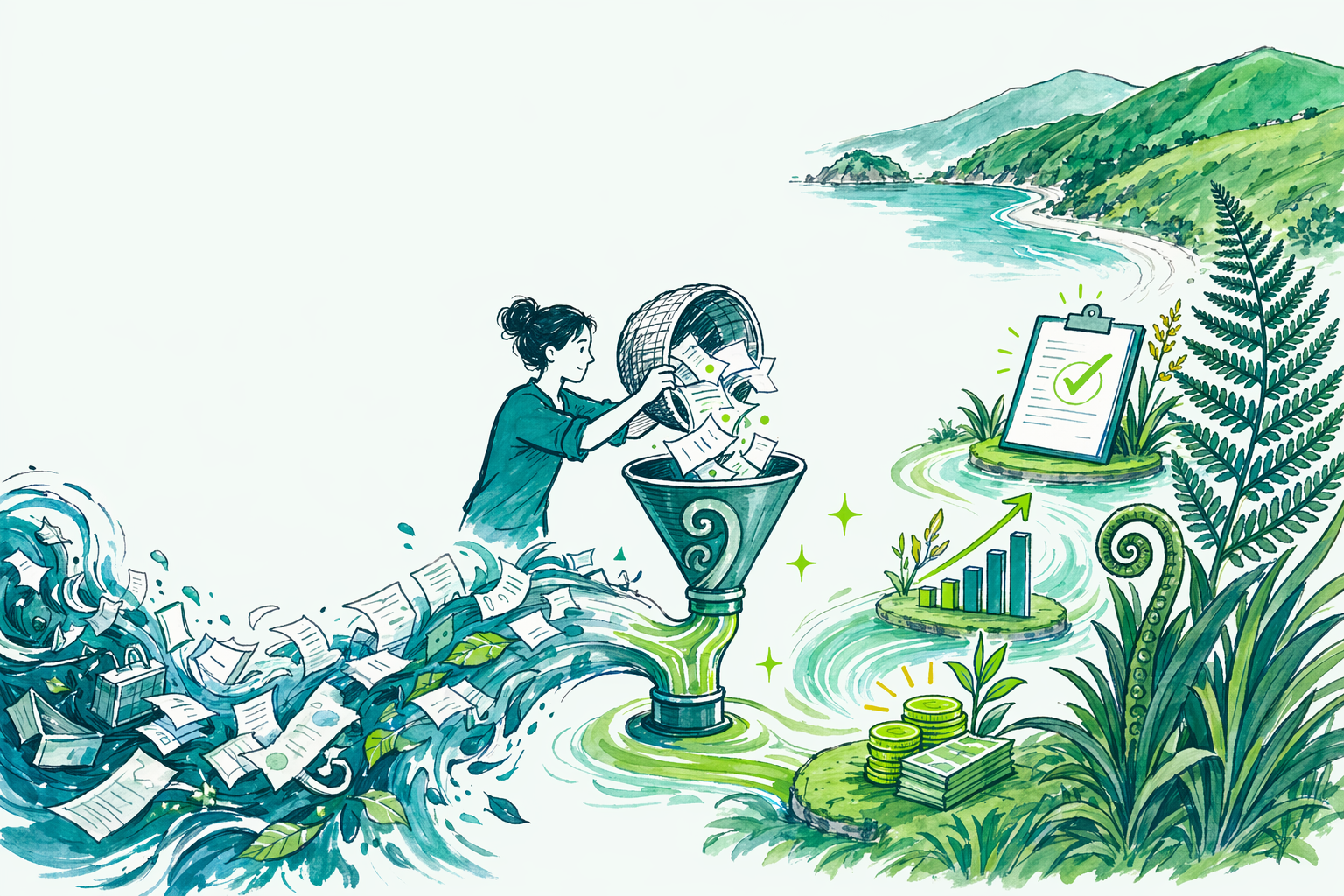
"Doing the accounts" is the once-a-year job of turning a year of transactions into financial statements and a correct tax return. It is also where surprises get caught, money gets recovered, and next year gets easier. Here is what actually happens, and what makes it painless versus painful.
What 'doing the accounts' means
For most NZ businesses the tax year ends on 31 March. End-of-year accounts are the process of taking everything that happened in that year and producing two things: a set of financial statements that show how the business performed, and an income tax return (an IR3 for a sole trader, an IR4 for a company) that tells IRD the right number.
It is more than just adding up sales and expenses. The year-end is when you reconcile the bank, confirm what is genuinely owed to and by the business, account for assets bought during the year, square off GST and provisional tax, and apply the adjustments that turn a rough cash position into a correct taxable profit. Done well, it is also a chance to check the business is paying the right tax and not a dollar more.
Financial statements explained
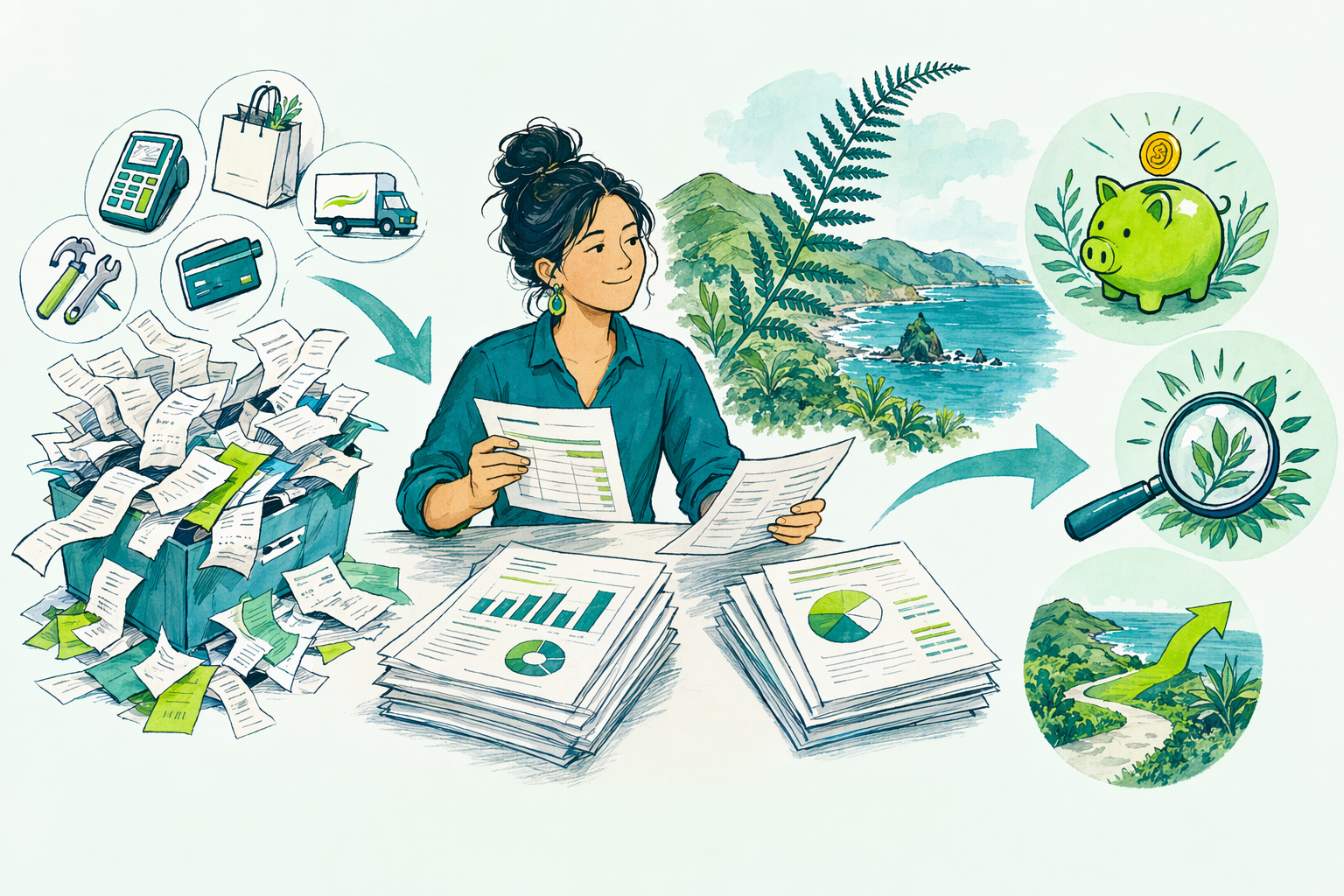
The two core statements are simpler than they sound:
- The profit and loss (income statement) shows income earned and expenses incurred over the year, ending in your profit or loss. This is the figure most tax is calculated from.
- The balance sheet is a snapshot at year-end of what the business owns (assets), what it owes (liabilities), and the owner's stake (equity).
For a company there is usually also a movements in equity view and notes covering things like the shareholder current account — the running tally of money you have put into or taken out of the company. Getting the current account right matters, because large overdrawn balances can create their own tax issues. Good financial statements are not just compliance paperwork; they are the clearest read you will get on whether the business is actually working.
Reconciling GST and provisional tax
A big part of year-end is the wash-up of the tax you have already paid during the year against what you actually owe:
- GST reconciliation checks that the GST in your accounting matches the GST returns you filed. Mismatches usually point to coding errors, missed invoices, or transactions in the wrong period — all easier to fix now than later.
- Provisional tax reconciliation compares the instalments you paid through the year against your final residual income tax. If you paid too little, there may be a top-up (and possibly use-of-money interest); if you paid too much, a refund is due.
This is the step that decides whether you finish the year with a refund, a manageable balance, or a bill plus interest. It is also where a good accountant earns their fee, by making sure income lands in the right year and provisional payments are credited correctly.
What your accountant needs from you
The faster you hand over clean information, the cheaper and quicker the job. A typical checklist:
- Bank statements for the full year, or Xero access if you use it.
- Records of income and expenses, including anything paid in cash or from a personal account.
- Details of asset purchases (equipment, vehicles, tools) so they can be depreciated correctly.
- Any loans, hire-purchase or finance agreements taken out during the year.
- Details of money drawn from the business by the owner or shareholders.
- Closing stock figures if you hold inventory, and any work in progress.
If you are a Xero user and your bank feeds are reconciled, much of this is already there. We give you a simple, plain-English checklist rather than a wall of jargon, so you are not guessing what we mean by "your reconciliations".
Common year-end adjustments
Several adjustments turn raw bookkeeping into a correct tax position. The usual ones include:
- Depreciation on assets, spreading the cost over their useful life rather than claiming it all in one year.
- Accruals and prepayments — recognising income earned but not yet invoiced, or expenses that relate to the next year.
- Private-use adjustments for things like home office, vehicle or phone used partly for personal reasons.
- Bad debts written off where a customer genuinely will not pay.
- Shareholder salary allocations in a company, deciding how profit is paid out as salary versus left in the company or paid as dividends.
These adjustments are where legitimate tax savings live, and also where DIY returns most often go wrong. Claiming an asset's full cost in one hit, or missing a private-use split, are the kinds of mistakes IRD picks up on review.
Making next year easier
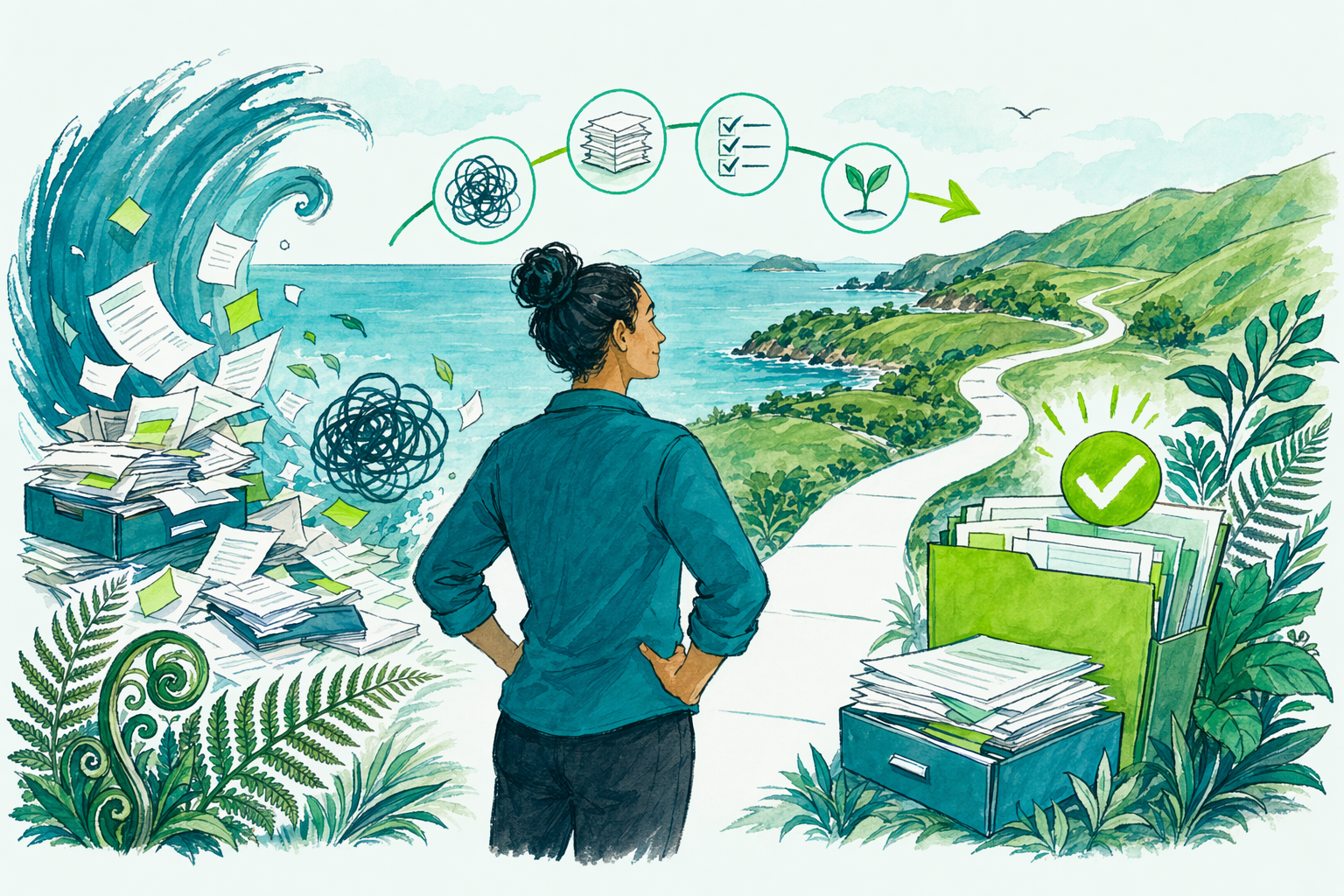
The best time to make year-end easy is the day after this one finishes:
- Keep business and personal money separate. One business bank account removes most of the untangling work.
- Reconcile little and often. A few minutes weekly in Xero beats a frantic catch-up in April.
- Photograph receipts as you go so expense evidence is captured before it fades or is lost.
- Put tax money aside through the year so the year-end bill is already funded.
- Ask questions during the year, not just at the end — a quick check before a big purchase often saves tax.
This is general information, not personalised tax advice. Your situation may differ, so book a free review to discuss it with us or check ird.govt.nz.
In plain English: end-of-year accounts turn a year of transactions into correct financial statements and the right tax number, and the cleaner your records are, the cheaper, faster and less stressful the whole job becomes.
This is general information, not personalised tax advice.See our full disclaimer.