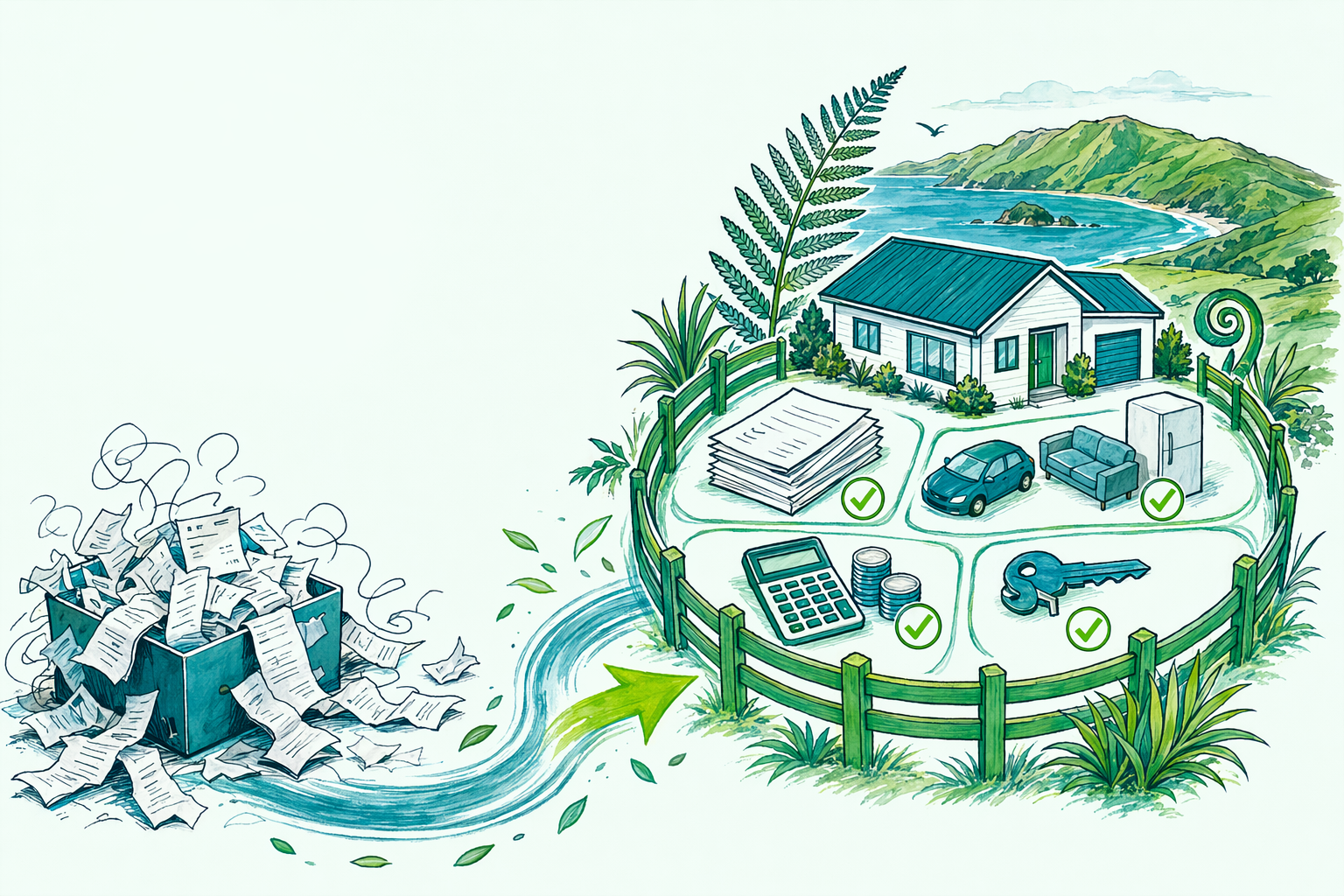
Rental returns get painful when the year-end shoebox of receipts meets New Zealand's ring-fencing rules. This free XLSX template keeps your income, expenses, interest and chattels tidy all year, so your return is fast and your deductions are not missed.
What's in the template
The template is a ready-to-use spreadsheet (XLSX) built specifically for New Zealand residential rental owners. It is organised the way a return is actually prepared, so nothing falls through the cracks.
Tabs and columns cover:
- Rental income by month and by property, including any tenant-paid charges that count as income.
- Operating expenses split into the categories IRD expects: rates, insurance, repairs and maintenance, property management, accounting, and other.
- Interest tracked separately, because mortgage interest deductibility for residential rentals has its own rules and needs to be visible on its own line.
- Chattels and capital items with purchase date and cost, ready for depreciation where it applies.
- A ring-fencing summary that shows whether the property made a profit or a loss for the year, since residential rental losses usually cannot offset your other income.
It works in Excel, Google Sheets, and Numbers. No macros, no add-ons, nothing to install.

Who it's for
This is for anyone who owns one or more residential rentals and would rather not rebuild their records from a carrier bag of receipts every March. In particular:
- First-time landlords who want to start clean and avoid year-one mistakes.
- Owners of two or three properties who need per-property totals so each one is treated correctly under ring-fencing.
- Investors handing records to an accountant who want to keep the fee down by arriving organised rather than chaotic.
If you hold property in a company or trust, the same data still helps, though the return itself differs. We can point you to the right treatment when you are ready.
How to fill it in
The template is designed to be updated little and often rather than in one painful annual session. A simple rhythm works best:
- Each month: drop in the rent received and any expenses paid. Five minutes is usually enough.
- When a bill arrives: file the receipt and add the amount to the matching expense column. Keep the receipt, IRD generally expects records held for 7 years.
- When you buy a chattel (a heat pump, carpet, an appliance): record the date and cost on the chattels tab so depreciation can be calculated correctly.
- At year-end: the summary tab totals everything and shows the profit or ring-fenced loss position, ready to hand over.
A quick note on interest: keep it on its own line. Because deductibility for residential rental interest has shifted in recent years, your accountant needs to see the interest figure clearly rather than buried inside a general expenses total.
A few categories trip people up every year, so the template handles them deliberately:
- Repairs versus improvements: fixing a broken fence is usually a deductible repair; replacing it with something better can be a capital improvement that is not immediately deductible. The template keeps these on separate lines so the distinction is not lost.
- Private use: if you ever use the property yourself, or rent below market to family, the deductible portion changes. A notes column lets you flag those periods.
- Mixed bills: where one invoice covers more than one property, split it at the time rather than guessing months later.
Download it free
The template is free. Enter your email on this page and we will send the XLSX over with a one-page guide on how to use each tab. No obligation.
If you would rather have someone set it up around your specific properties, or check that last year's return handled ring-fencing correctly, book a free review and we will take a look.
This is general information only, current at the time of writing, and not personalised tax advice. Your situation may differ. Confirm the detail with us or check ird.govt.nz before you act.
Where to go next
Good records are step one. Knowing how the rules apply to your situation is step two. Useful next reads:
- Our overview of tax for rental-property investors explains ring-fencing, interest, and bright-line in one place.
- Heading into March? Pair this with the year-end tax prep checklist so nothing is missed.
- Want it done for you? See our services or get in touch.
In plain English: keep this spreadsheet up to date each month and your rental return stops being a year-end scramble.
This is general information, not personalised tax advice.See our full disclaimer.