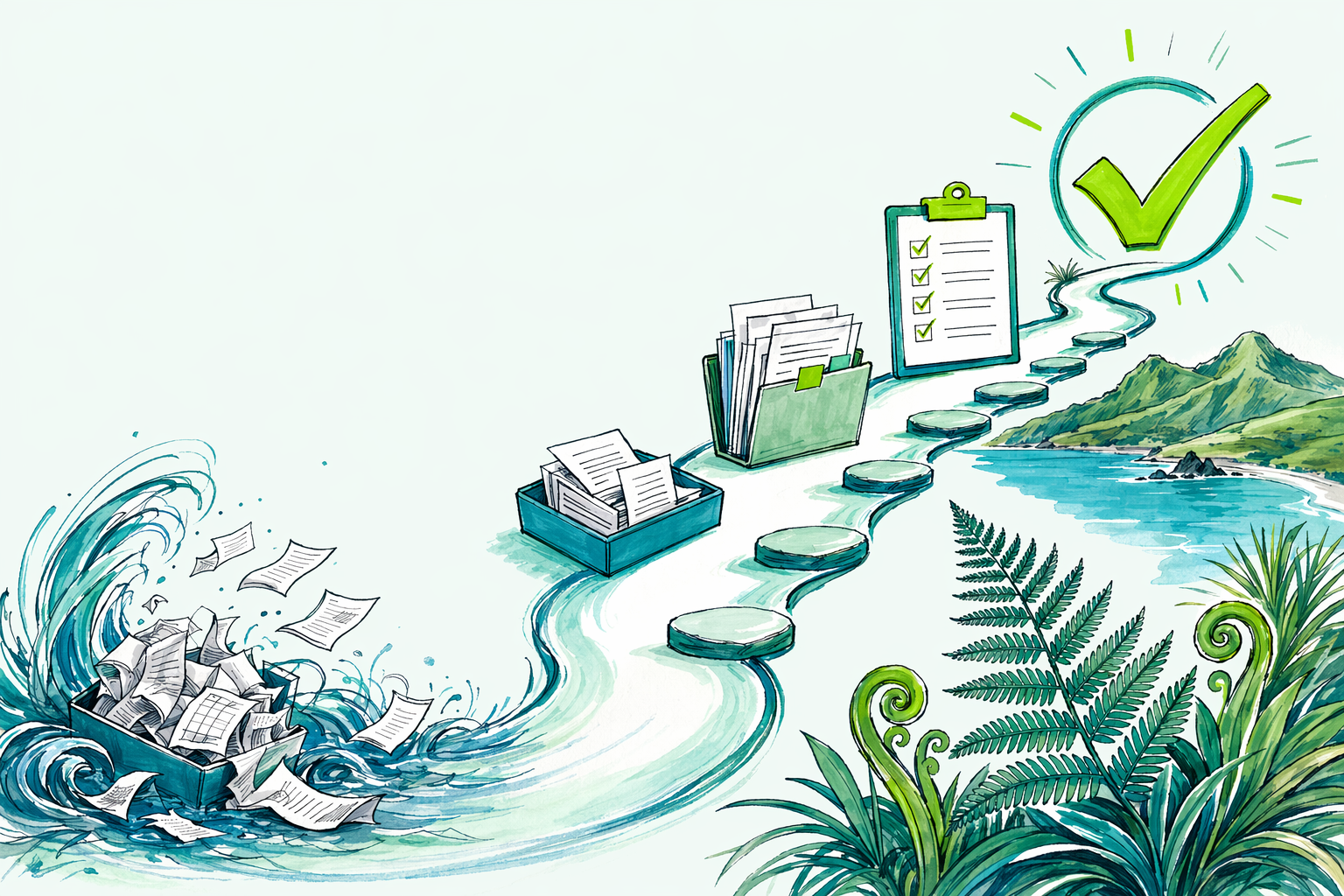
Year-end accounts move fast when your records arrive complete, and slowly (and more expensively) when they do not. This free checklist lists exactly what your accountant needs, so your end-of-year is finished cleanly the first time.
What's in the checklist
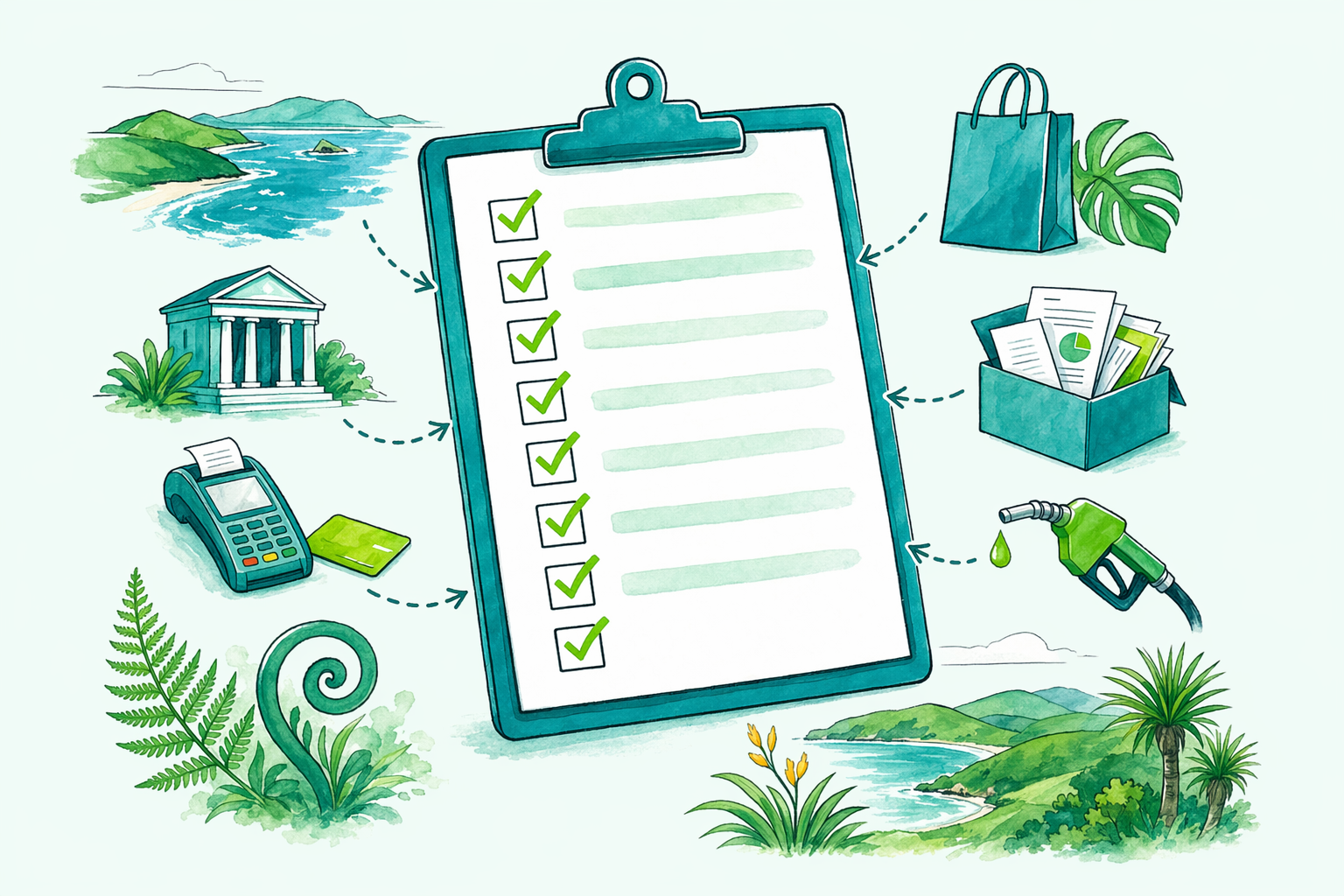
The checklist is a single, printable page grouping every document and detail needed to finish a typical New Zealand set of year-end accounts. It is organised by source so you can tick items off as you gather them.
It covers:
- Income: sales totals, bank interest, dividends, and any other income for the year ended 31 March (the standard balance date).
- Bank and loan statements: the closing position at year-end, plus loan balances and interest paid.
- Expenses: categorised totals or a clean export, with receipts retained.
- Assets bought or sold: dates and amounts for vehicles, equipment, and other capital items, so depreciation is handled correctly.
- GST: copies of returns filed during the year, to reconcile against the accounts.
- Wages and contractors: payroll summaries and any schedular-payment or withholding details.
- Stock on hand at year-end, if you carry inventory.
It also prompts you for the easy-to-forget items that hold up an otherwise finished set of accounts:
- Home-office details if you work from home, so the use-of-home portion can be claimed.
- Vehicle use records or a logbook, where you claim running costs or mileage.
- Entertainment spend, which is often only partly deductible and needs to be identified.
- Donations receipts, if you want to claim the donation tax credit on an IR526.
Who it's for
Anyone facing a 31 March year-end who wants it over quickly:
- Sole traders filing an IR3 who want their figures straight before the return.
- Company directors preparing for an IR4 and a set of financial statements.
- Anyone using an accountant who would like a smaller fee and a faster turnaround by arriving fully prepared.
The neater your pack, the less time anyone spends chasing missing pieces, and the sooner you know your final position. That matters, because your year-end result also feeds into next year's provisional tax.
How to use it
Treat the checklist as a gathering list, not a test. The simplest approach:
- Print it (or keep it open) and work top to bottom, ticking each item as you locate it.
- Put everything in one folder, digital or physical, so it travels together.
- Flag anything unusual during the year: a property sale, a new vehicle, a one-off large contract, or a change of structure. These are exactly the items that need a conversation, not a guess.
- If you use accounting software, reconcile your bank to 31 March before you export, so the figures you hand over already tie out.
Two reminders that save real money: keep your records for at least 7 years as IRD generally requires, and do not throw away receipts for anything claimed. A tidy trail protects your deductions if questions ever arise.
Download it free
The checklist is free. Add your email and we will send the printable version straight over. No obligation, no follow-up unless you want one.
If your records are behind, or you have a year or two of accounts to catch up, that is common and fixable. Book a free review and we will map out the quickest way to get current.
This is general information only, current at the time of writing, and not personalised tax advice. Your situation may differ. Confirm the detail with us or check ird.govt.nz before you act.
Where to go next
Once your pack is together, the rest is straightforward. A few next steps:
- Running a company or trust? See company and trust accounts in Xero for how we prepare those.
- Own a rental? Pair this with the rental-property record template so the property side is ready too.
- Want the whole year-end handled for you? See our services or get in touch.
In plain English: gather everything on this list before you hand over your books, and year-end becomes a quick job instead of a long one.
This is general information, not personalised tax advice.See our full disclaimer.