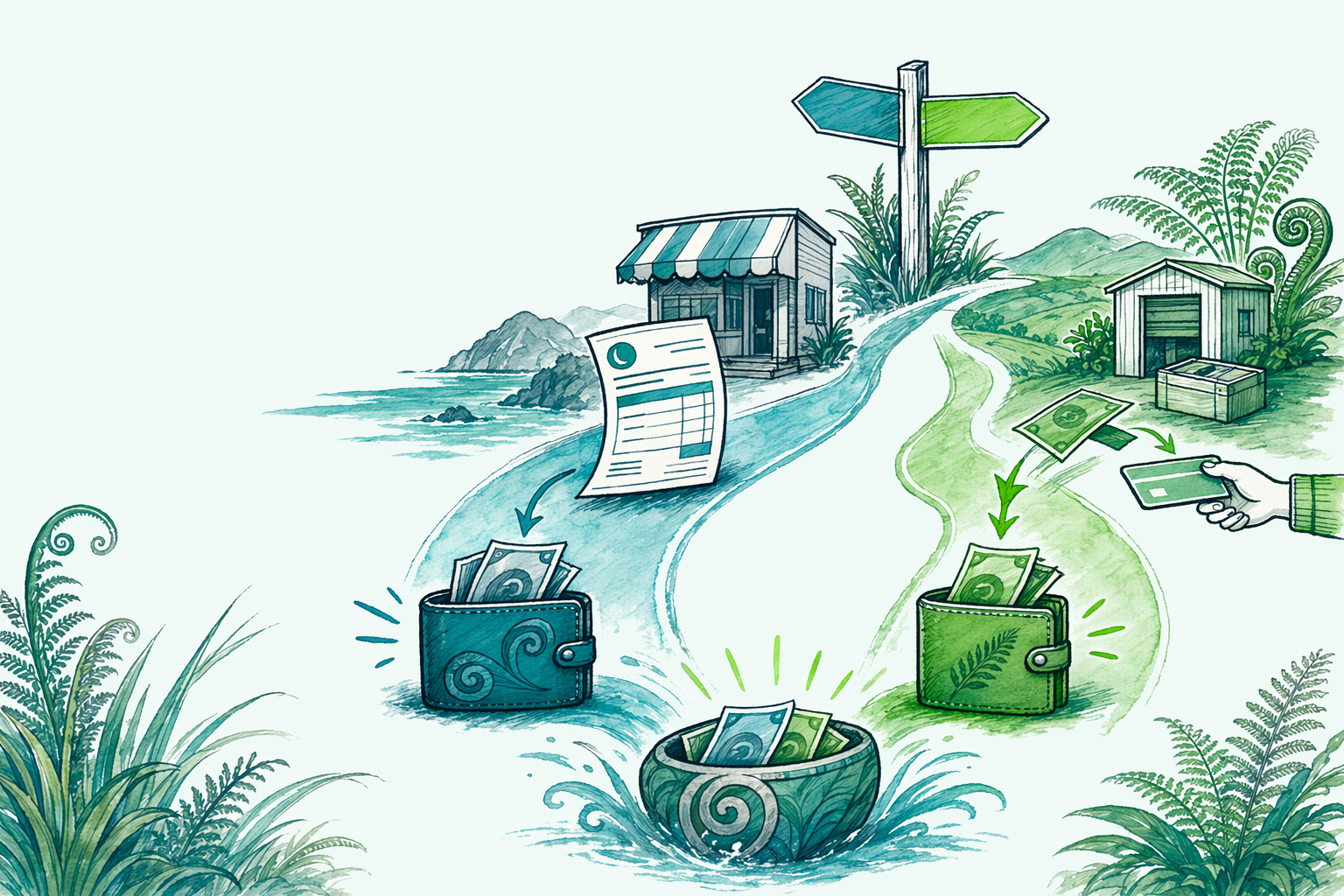
When you register for GST you choose an accounting basis, and the choice quietly shapes your cashflow for years. Invoice basis and payments basis collect the same GST in the end, but at very different moments.
Quick answer
The two main GST accounting bases are invoice basis and payments basis (sometimes called cash basis). On the invoice basis you account for GST when you issue or receive an invoice. On the payments basis you account for it when money actually changes hands. Payments basis is usually easier on cashflow for smaller businesses, but eligibility for it depends on your turnover. Both reach the same total over time.
The detail, in plain English
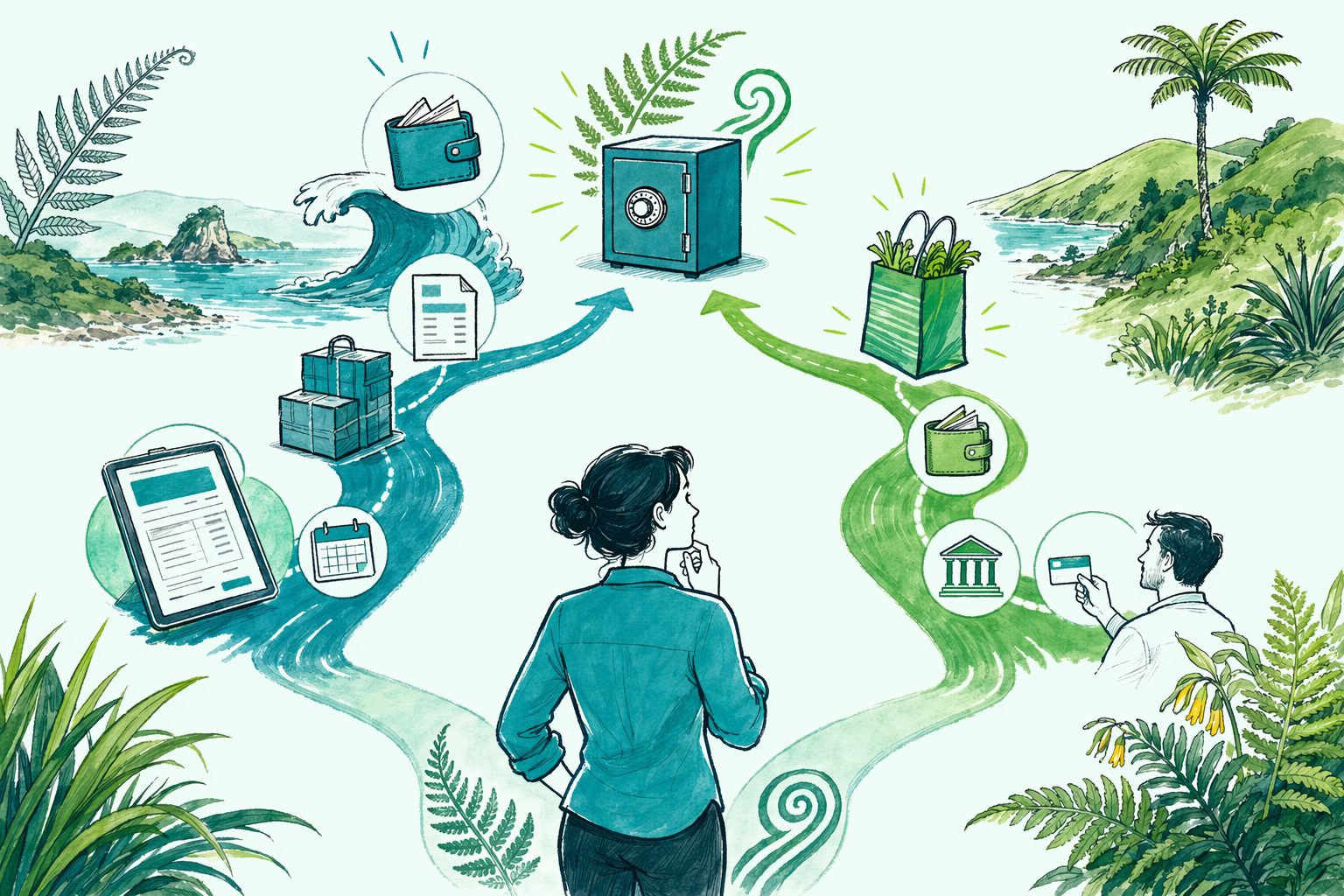
The whole difference is timing, specifically when a sale or purchase counts for GST.
- Invoice basis: you owe GST on a sale as soon as you raise the invoice, even if the customer has not paid yet, and you can claim GST on a purchase as soon as you receive the supplier's invoice.
- Payments basis: you owe GST only when the customer actually pays you, and you claim only when you actually pay the supplier.
Eligibility matters here. The payments basis is generally available to smaller businesses below a turnover ceiling, while larger businesses are typically required to use the invoice basis. There is also a hybrid basis, but the invoice and payments bases cover most situations.
The practical effect: if your customers are slow to pay, invoice basis can mean handing GST to IRD before the cash arrives. Payments basis avoids that by following the money.
A simple example
You raise a $11,500 invoice (including $1,500 of GST) on the last day of a GST period, and the customer pays you six weeks later in the next period.
| Basis | When you account for the $1,500 GST |
|---|---|
| Invoice basis | This period, when the invoice is raised, before you are paid |
| Payments basis | Next period, when the customer actually pays |
On invoice basis you might be paying $1,500 of GST out of your own pocket until the customer settles up. On payments basis the GST follows the cash, which protects your working capital.
Common mistakes to avoid
- Defaulting without thinking. The basis is a real choice with cashflow consequences, not a formality.
- Assuming you can use payments basis. It has an eligibility ceiling tied to turnover.
- Mixing the two in your records. Pick one and apply it consistently across sales and purchases.
- Forgetting to revisit it. As you grow, the better basis can change, and you may eventually be required to switch.
Where this fits in your return
Your chosen basis drives how every figure on your GST return is timed, so it pairs closely with how to file a GST return. The decision usually comes up at registration, which we cover on the GST registration threshold page, and it sits within the wider GST and provisional tax service.
How Fernway can help
We look at how your customers pay, how your suppliers invoice, and your turnover, then recommend the basis that protects your cashflow and keeps you eligible. We set it up correctly in your accounting software and switch you over cleanly if and when growth makes it sensible. Fixed fee, agreed before we start.
Book a free 20-minute review and we will pick the right basis for your business.
This is general information only, not personalised tax advice. Confirm your situation with us or check ird.govt.nz.
In plain English: invoice basis counts GST when you bill, payments basis counts it when you are paid; for slow-paying customers payments basis is usually kinder to cashflow, if your turnover lets you use it.
This is general information, not personalised tax advice.See our full disclaimer.