
Give to an approved New Zealand charity and you can claim back roughly a third of what you gave as a tax credit. It is one of the simplest ways to reduce the tax you pay, but only if you keep the receipts.
Quick answer
If you make a cash donation of $5 or more to a New Zealand approved donee organisation, you can claim a tax credit of 33.33% of the amount you gave. Donate $300 in a year and you can claim $100 back. The credit is capped at your taxable income for the year, so you cannot claim more than you earned.
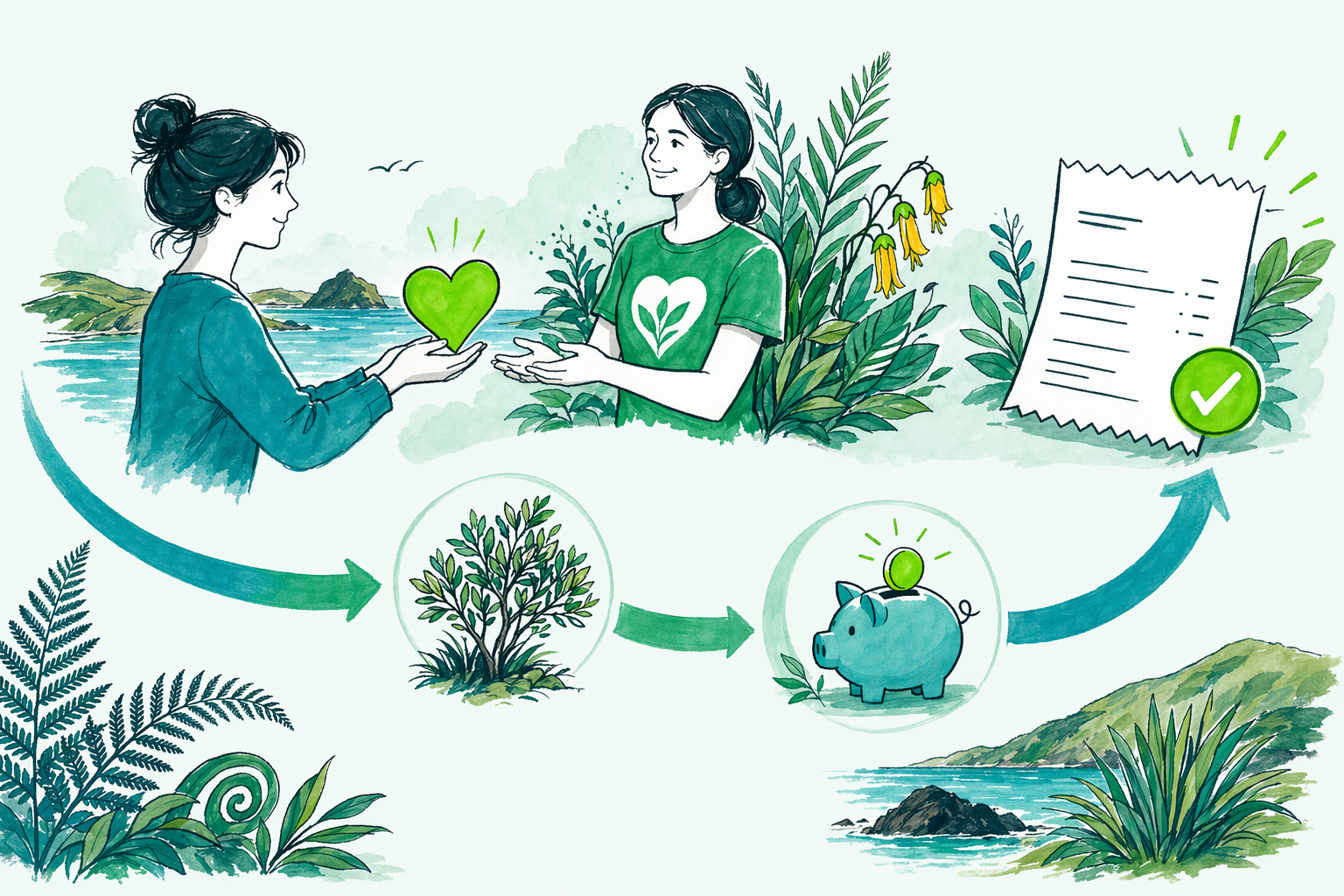
You claim it after the tax year ends by submitting your receipts to IRD, either through myIR or with a donation tax credit claim. It is a personal credit, separate from a business deduction, so it is the individual who gave the money who claims it.
The detail, in plain English
The donations credit rewards personal generosity through the tax system. The key conditions are straightforward:
- The gift must be money (not goods, time or services) of $5 or more.
- It must go to an organisation on IRD's approved donee list, or to a recognised school or religious organisation.
- You need a valid receipt showing the charity's name, the amount, the date, the word 'donation', and the donee's registration details.
- You must have taxable income at least equal to the donations you are claiming.
The credit is 33.33%, which lines up with the idea of getting back a third of your gift. School fees that are genuinely voluntary donations can qualify, but compulsory fees, tuition for a specific service, and anything where you received something in return (a raffle ticket, an auction item) do not. If a company donates, that is a deduction in the company rather than this personal credit, so the path depends on who actually made the gift.
It is worth being clear on the difference between a personal credit and a business deduction, because people mix them up. As an individual, you claim the 33.33% credit on your personal donations after year-end. If a company makes a donation to an approved donee, that is instead a deduction in the company's accounts, subject to its own limits. Same generosity, different mechanism, and you generally cannot claim both ways for the same dollar.
Receipts are the make-or-break detail. A valid donation receipt names the donee organisation, states the amount and date, uses the word 'donation', and shows the organisation's registration or approved-donee status. Many charities now email these automatically and IRD lets you upload them through myIR as you go, which beats hunting for a shoebox of paper in July.
A simple example
Aroha gives $1,200 across the year to approved charities and her local school's donation fund, and keeps every receipt. Her taxable income is well above $1,200, so she can claim the lot.
| Item | Amount |
|---|---|
| Total approved donations | $1,200 |
| Credit rate | 33.33% |
| Tax credit refunded | $400 |
After the tax year ends, Aroha uploads her receipts to myIR and IRD pays the $400 back to her bank account. Nothing about her actual donations changed; she simply claimed a credit she was always entitled to.
Common mistakes to avoid
- Throwing away receipts. No receipt, no claim. Keep them all and claim once a year.
- Claiming non-cash gifts. Donating goods, volunteering time, or gifting shares does not qualify for this credit.
- Confusing fees with donations. Compulsory school fees and payments for a service are not donations.
- Giving to an unapproved group. The organisation must be an IRD-approved donee; an overseas charity often is not.
- Claiming more than your income. The credit is capped at your taxable income for the year.
A subtler trap is the timing of the claim. The credit is claimed for the tax year in which the donation was made, so a gift on 30 March and a gift on 2 April fall in different years. If you are close to a year-end and want the credit sooner, the date you give matters.
Where this fits in your return
The donations credit is not part of your income tax calculation in the IR3 itself; it is a separate personal credit claimed after year-end. If you are self-employed and your income drives entitlements like Working for Families, it pays to file your IR3 first so your income is settled, then claim your donations on top.
How Fernway can help
When we prepare your return we also tidy up your donations claim, check the charities are approved donees, and make sure you are not leaving a refund on the table. For families, we line the credit up with your wider individual return. Book a free 20-minute review and bring your receipts.
This is general information only, current at the time of writing, and not personalised tax advice. Your situation may differ, so confirm the detail with us or check ird.govt.nz before you act.
In plain English: give cash to an approved Kiwi charity, keep the receipt, and claim a third of it back as a tax credit after the year ends.
This is general information, not personalised tax advice.See our full disclaimer.