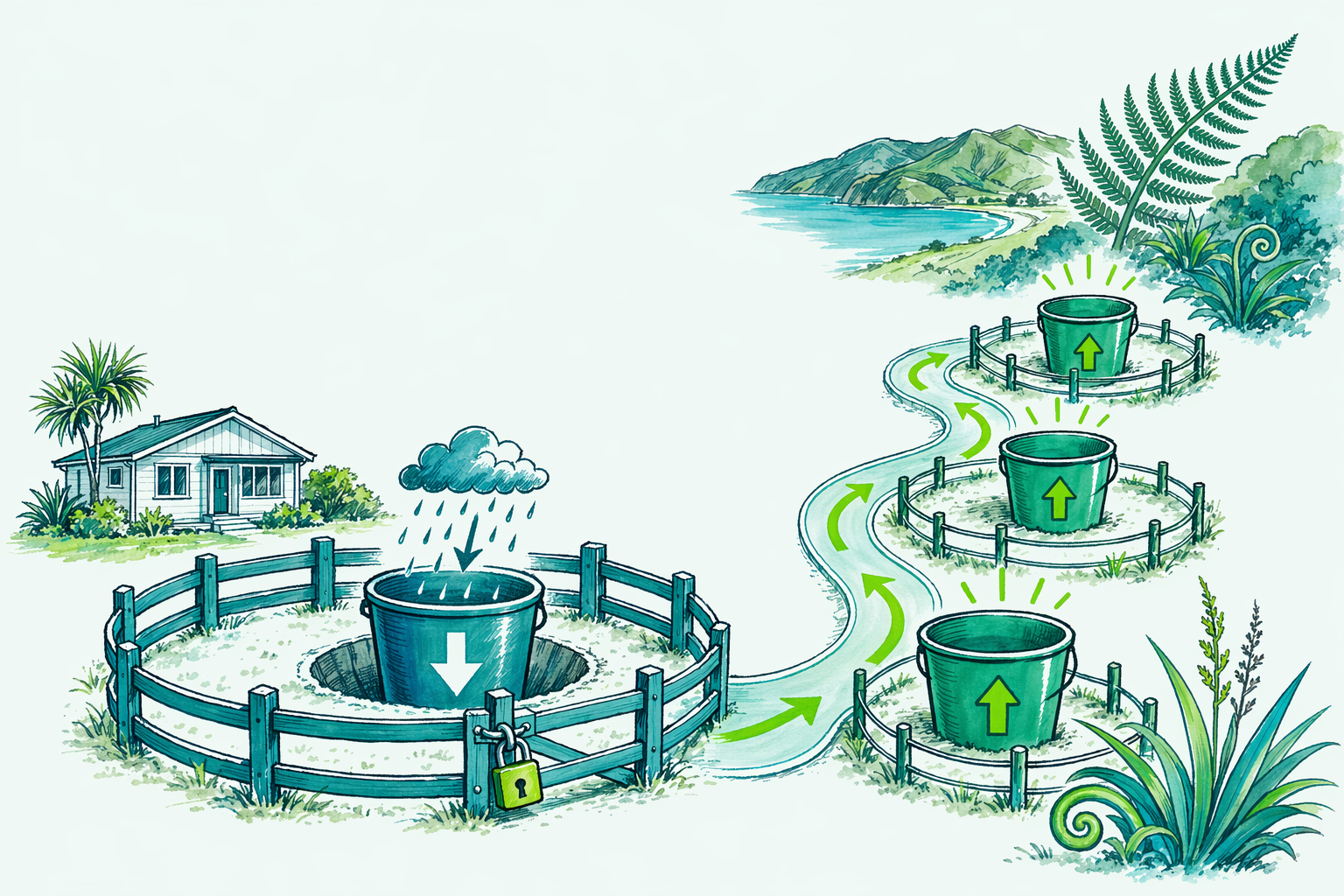
Ring-fencing is easiest to understand with real numbers. This walkthrough shows how a residential rental loss is carried forward to future rental income instead of being used against your salary, and what that does to your tax in a loss year and a profit year.
Quick answer
If your residential rental makes a loss, you generally cannot subtract that loss from your salary or other income. Instead it is ring-fenced — held against your rental activity and carried forward to offset future rental profit. The loss is not wasted, it is just parked until your rentals make money.
The practical effect is that a negatively-geared rental no longer reduces the tax on your day job. It used to; the ring-fencing rules changed that.
The detail, in plain English
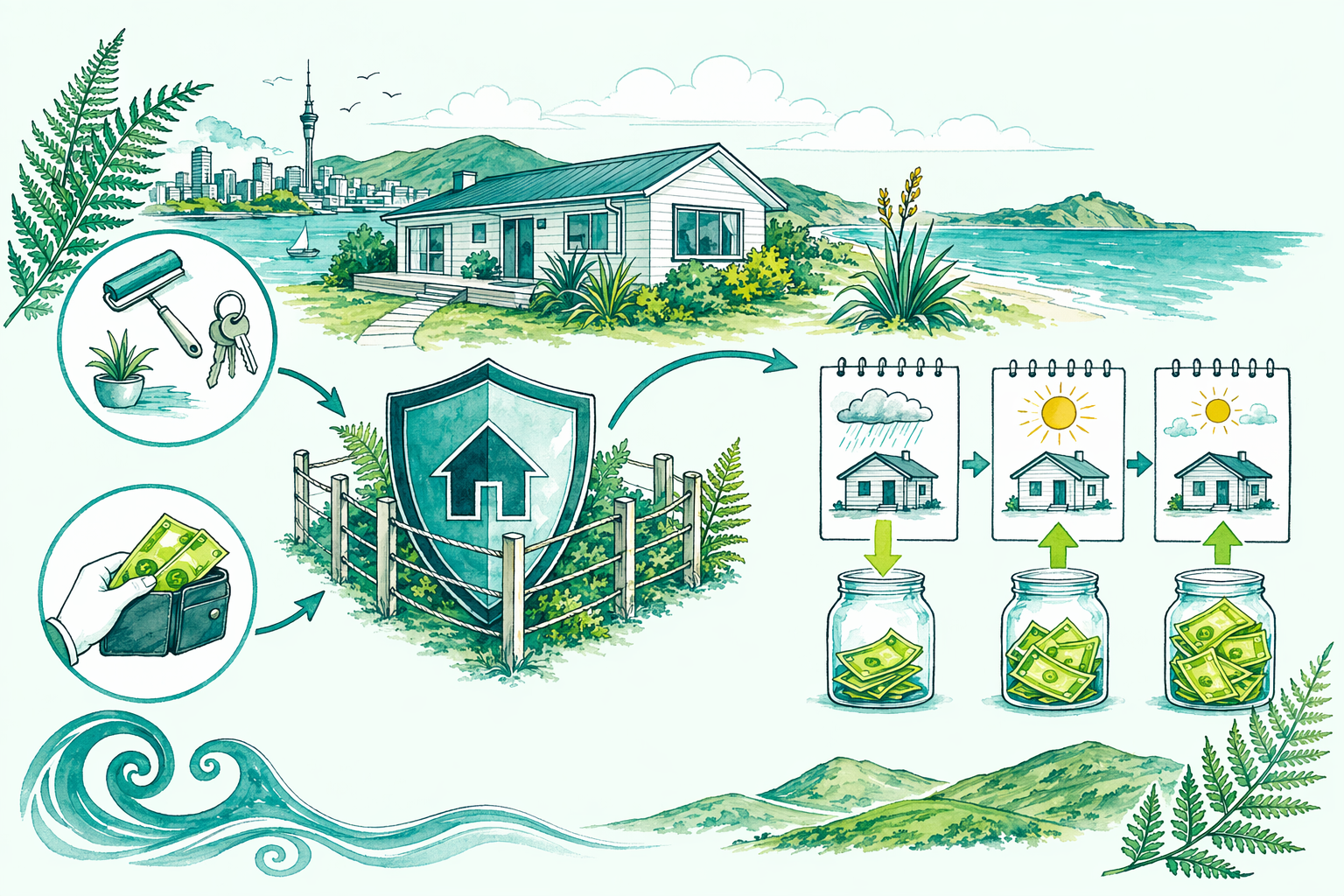
A rental loss happens when your deductible rental costs (rates, insurance, repairs, agent fees, and any deductible interest) are more than your rent. Before ring-fencing, an investor could use that loss to cut the tax on their salary. Now the loss is locked inside the rental "fence".
It is generally worked out on a portfolio basis, meaning your residential rentals are grouped together. A loss on one property can offset a profit on another within the portfolio in the same year. Only the net portfolio loss is ring-fenced and carried forward. The carried-forward loss stays available year after year until rental profits use it up.
A simple example
Meet an investor with a salary of $90,000 and one rental. In year one the rental makes a $8,000 loss. In year two, after a rent increase and lower costs, it makes a $5,000 profit.
| Year 1 | Year 2 | |
|---|---|---|
| Salary | $90,000 | $90,000 |
| Rental result | -$8,000 loss | +$5,000 profit |
| Loss applied this year | $0 (ring-fenced) | $5,000 of brought-forward loss |
| Taxable rental income | $0 | $0 (profit fully offset) |
| Loss carried forward | $8,000 | $3,000 remaining |
In year one the $8,000 loss does nothing to the tax on the $90,000 salary; it is carried forward instead. In year two the $5,000 rental profit is wiped out by part of that brought-forward loss, so no tax is paid on the rental, and $3,000 of loss is still carried forward to later years.
Common mistakes to avoid
- Expecting a salary refund from a rental loss. That offset no longer happens for residential rentals.
- Losing track of the carried-forward balance. The loss only helps if you record it and bring it forward each year.
- Forgetting interest-deductibility rules, which affect how big the loss is in the first place.
- Treating each property separately when a portfolio approach lets profits and losses net off within the year.
- Assuming it applies to everything — some property, such as land taxed on sale or certain new-build situations, can fall outside the standard ring-fencing treatment.
Where this fits in your return
Your rental result is calculated and reported as part of your IR3. The ring-fenced loss is tracked from year to year on your return, so each year's filing carries the running balance forward. It also interacts with the bright-line test if you sell, and your rental figures feed into family-income tests like Working for Families. Keeping an accurate carried-forward loss schedule is the part most DIY investors miss.
How Fernway can help
We prepare your rental accounts, track the ring-fenced loss correctly from year to year so none of it is lost, and make sure the right losses are applied in the right years. We also flag how a future sale or a change in your portfolio could affect the position. Fixed fee, quoted up front.
This is general information, not personalised tax advice. Your situation may differ, so book a free review to discuss it with us or check ird.govt.nz.
This is general information, not personalised tax advice.See our full disclaimer.