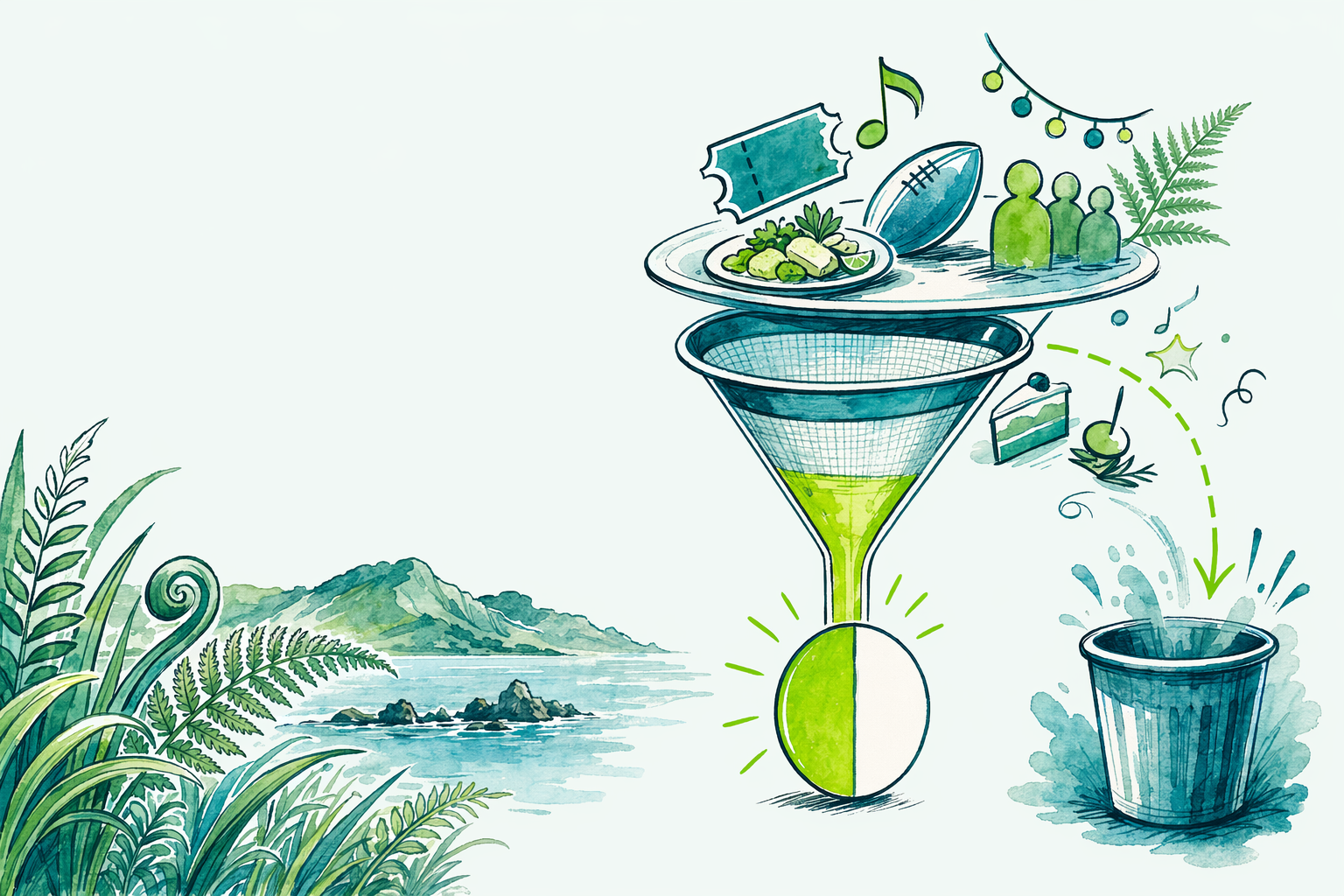
Entertainment is one of the most misunderstood business deductions in New Zealand. Many common costs are only 50% deductible, and getting it wrong is an easy way to invite an IRD adjustment.
Quick answer
Short version: a lot of business entertainment in New Zealand is only 50% deductible, not the full amount. The classic examples are staff Christmas parties, shouting a client lunch, drinks and nibbles in the office, and a corporate box at the rugby. You can still claim them, but only half the cost reduces your taxable income, and you also have to claw back the GST on the non-deductible half at year-end.
Some entertainment is fully deductible. Food and drink consumed while travelling on business away from your normal work area, light refreshments at a genuine work meeting, and entertainment you are in the business of providing (a caterer, for instance) generally sit outside the 50% rule.
The detail, in plain English
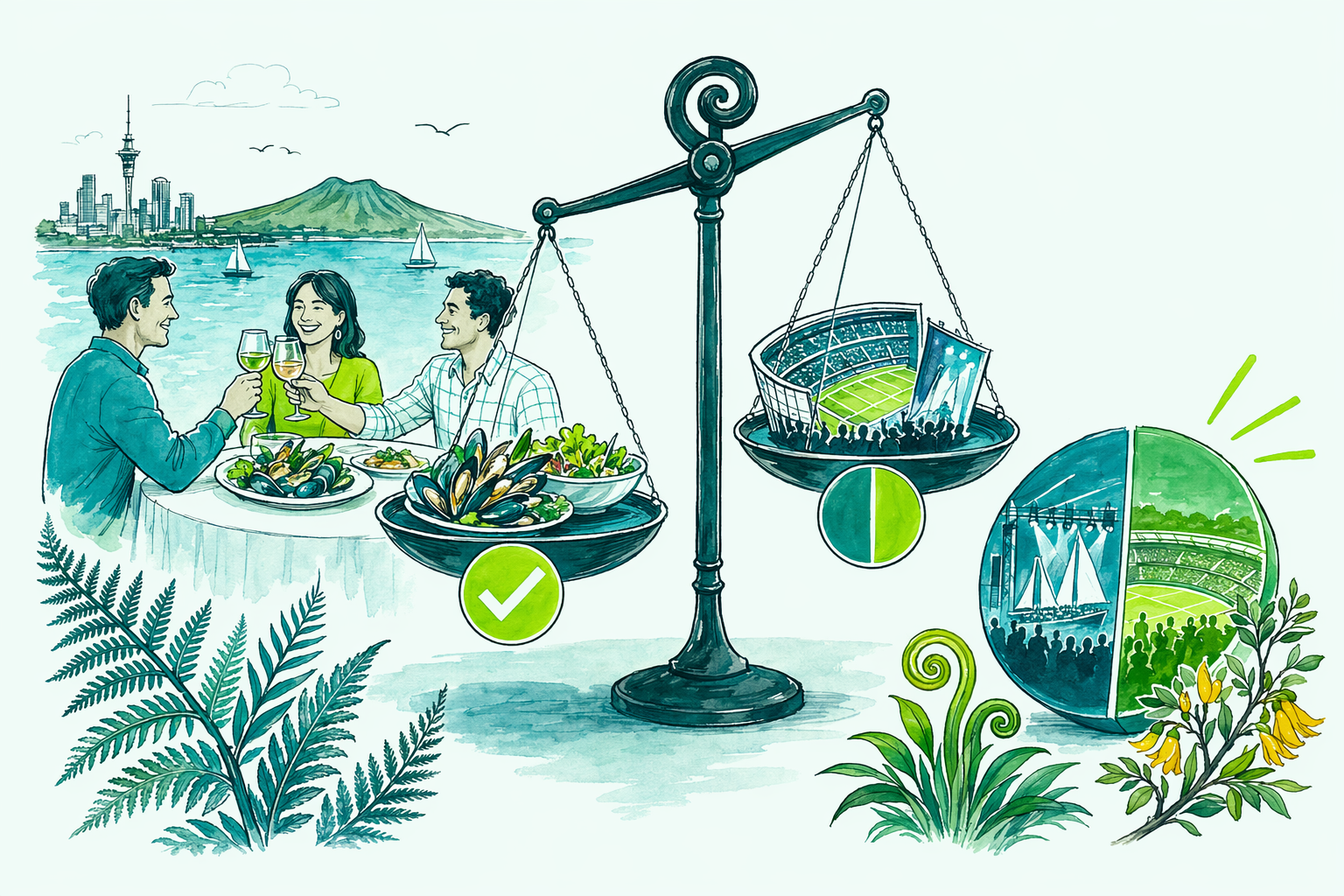
The 50% rule exists because a meal or a night out usually has a private benefit baked in. You enjoyed the dinner; IRD's view is that the taxpayer should not carry the full cost of something you would have valued personally. So the rules split a defined list of entertainment expenses in half.
Costs that are commonly caught at 50% include:
- Corporate boxes, marquees and similar at sporting or cultural events
- Holiday accommodation taken mainly for entertainment
- Pleasure craft used for entertaining
- Food and drink at a party, reception, celebration or off-site function, including the staff Christmas do
- Food and drink provided in a social setting where there is a significant private element
Costs that are usually 100% deductible include a working lunch where the meeting is the real purpose, morning tea you put on for the whole team, meals while genuinely travelling on business, and entertainment provided to the public for promotion (a free sample stand at a market, say). The line between a deductible work meeting and a social occasion is where most disputes happen.
There is a GST wrinkle too. You claim GST on entertainment as normal through the year, then at the end of your income year you make an adjustment to pay back the GST that relates to the 50% non-deductible portion. Good accounting software handles this if entertainment is coded to the right account.
It helps to think in three buckets. The 50% bucket is the social, hospitality and event spending where you and your guests get a genuine enjoyment benefit. The 100% bucket is functional spending where food and drink is incidental to doing business, or where entertainment is the product you sell. The private bucket is anything purely personal, which is not deductible at all and should never go through the business in the first place.
One more practical point: the rules look at the nature of the spend, not the label on the invoice. Calling a Friday night out a 'team meeting' does not make it one. If the dominant purpose is social, it is 50%, full stop. Conversely, a working lunch where you genuinely thrash out a contract over sandwiches can be fully deductible even though food was involved. Document the purpose and you will be on solid ground.
A simple example
Say your company spends $1,000 + GST on a year-end staff dinner. That is $1,150 all up. Because the dinner is a social function, it falls under the 50% rule.
| Item | Amount |
|---|---|
| Total spend (incl. GST) | $1,150 |
| Deductible portion (50% of $1,000 net) | $500 claimed against income |
| Non-deductible portion | $500 not claimed |
| GST adjustment at year-end (pay back 50%) | $75 |
So the dinner reduces your taxable income by $500, and you hand back $75 of the GST you originally claimed. The net cost to the business is higher than people expect, which is exactly why it pays to know the rule before you book the venue.
Common mistakes to avoid
- Claiming 100% on a social event. The most common error is treating the Christmas party or a client dinner as fully deductible.
- Forgetting the GST year-end adjustment. If you claim full GST through the year and never wash it up, your GST position is wrong.
- Mixing up travel meals and entertaining. A solo meal while away on business is usually 100%; the same meal turned into a client dinner can flip to 50%.
- No record of who and why. A receipt with no note about the business purpose makes the claim hard to defend if IRD asks.
The thread running through all of these is the same: entertainment is the easiest expense category for IRD to test, because the private-benefit question is so often arguable. A short note on each receipt saying who attended and why turns a shaky claim into a defensible one, and that habit costs nothing.
Where this fits in your return
Entertainment flows through your profit and loss as an expense, so it lands in your IR3 (sole trader) or IR4 (company) via your financial statements. The 50% restriction is applied when the accounts are prepared, and the GST adjustment shows up in your final GST return for the year. If you are also dealing with vehicles or perks, entertainment sits alongside questions about fringe benefit tax, and clean coding makes both far easier.
If you run accounting software, the cleanest approach is a dedicated 'Entertainment (50%)' account so the restriction and the GST wash-up are applied to one clearly identified pool at year-end, rather than hunting through general expenses. That single coding decision saves time and reduces the chance of an error that snowballs across the year.
How Fernway can help
We set your chart of accounts up so entertainment is captured in one place, apply the 50% restriction and the GST wash-up correctly at year-end, and tell you which of your costs are genuinely full-rate. If you want the wider picture on deductions and record-keeping, see what records to keep and our company accounts service, or book a free 20-minute review.
This is general information only, current at the time of writing, and not personalised tax advice. Your situation may differ, so confirm the detail with us or check ird.govt.nz before you act.
In plain English: most business meals and parties are only half deductible in New Zealand, so claim 50%, remember the year-end GST adjustment, and keep a note of the business reason.
This is general information, not personalised tax advice.See our full disclaimer.