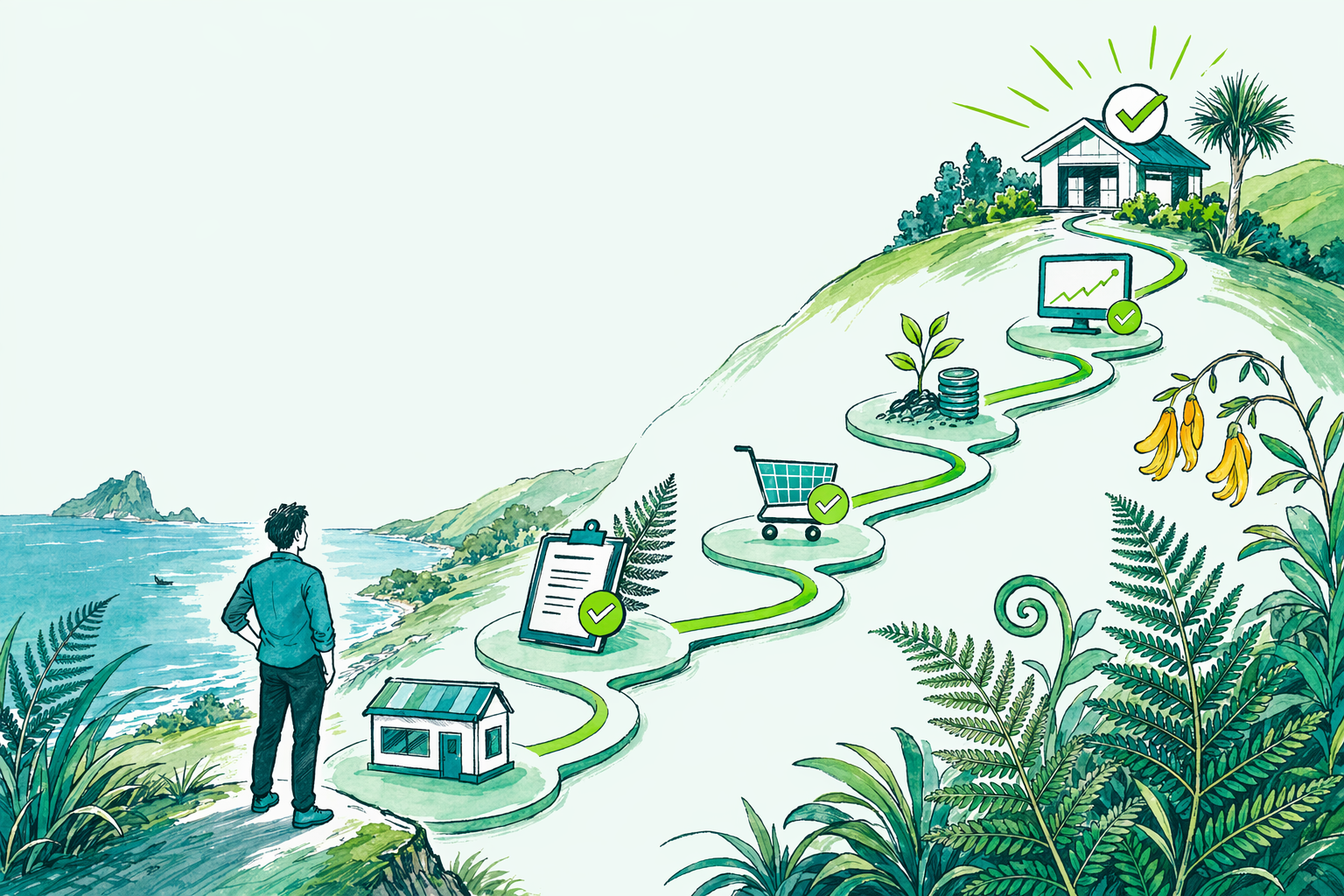
Getting the tax foundations right in your first weeks saves a year of clean-up later. This free setup guide walks a new New Zealand business through structure, IRD registrations, GST, provisional tax, and software, in the right order.
What's in the guide
The guide is a practical setup walkthrough for new New Zealand businesses. It is sequenced the way the decisions actually arrive, so you are not bouncing between half-finished tasks.
It covers the five things that matter most at the start:
- Structure: sole trader, company, or look-through company, and the tax and liability differences between them.
- IRD registrations: your IRD number, the right tax type, and employer registration if you will pay wages.
- GST: whether you need to register now (the $60,000 threshold) or whether voluntary registration helps you.
- Provisional tax: what it is, why it tends to surprise people in year two, and how to plan for it.
- Software and records: setting up clean record-keeping from day one so year-end is simple.
It is written in plain English and assumes no prior tax knowledge.
Who it's for
This is for people at the very start of their business journey:
- First-time founders who want to do the admin once and do it right.
- Contractors and freelancers going out on their own and unsure what IRD expects.
- Side-businesses turning serious that have outgrown casual record-keeping.
- New migrants starting a business here who find the IRD system unfamiliar.
If you are weighing whether to be a sole trader or a company, that single choice shapes your tax, your liability, and your paperwork, so it is worth getting clear before you register anything.
The setup steps
The guide follows a logical order. In outline:
| Step | What you decide or do |
|---|---|
| 1. Choose a structure | Sole trader (simple, you are personally liable) or company (separate legal entity, taxed at 28%, more compliance). |
| 2. Register with IRD | Get set up for income tax, and for the right tax type for your structure. |
| 3. Decide on GST | Required over $60,000 turnover; optional below, depending on who your customers are. |
| 4. Plan for provisional tax | Once your tax bill passes the threshold, IRD asks you to pay in instalments. Set money aside early. |
| 5. Set up records and software | Choose a system, separate business and personal banking, and keep everything from day one. |
The biggest first-year trap is cashflow: income tax and provisional tax can land together in year two, so a simple habit of setting aside a portion of every payment makes a huge difference.
One extra habit makes the whole first year easier: separate your business and personal money from day one. A dedicated business bank account turns a tangle of mixed transactions into clean records, makes your GST and year-end far simpler, and keeps the line between you and the business clear, which matters most if you are a company. It costs nothing and saves hours later.
Download it free
The guide is free. Pop your email in and we will send it over with a short note on which steps tend to trip people up. No obligation.
Starting a business is the right time for a quick sanity check. Book a free review and we will confirm your structure and registrations are set up the way you actually need them.
This is general information only, current at the time of writing, and not personalised tax advice. Your situation may differ. Confirm the detail with us or check ird.govt.nz before you act.
Where to go next
Once the foundations are in place, a couple of next steps keep you on track:
- If you have chosen a company, see company and trust accounts in Xero for how the year-end works.
- Unsure about GST? The GST registration decision guide walks through the threshold call.
- Want a hand setting it all up? See our services or get in touch.
In plain English: pick a structure, register with IRD, sort GST, plan for provisional tax, and set up clean records, in that order, and your first year stays simple.
This is general information, not personalised tax advice.See our full disclaimer.