
If a tax bill lands that you can't pay in one go, an instalment arrangement with IRD lets you pay it off over time. Set one up early and you stop penalties piling on; ignore the bill and the cost only grows.
Quick answer
An instalment arrangement is a formal agreement to pay your tax debt in regular instalments instead of a single lump sum. You can request one through myIR, by phone, or have your tax agent arrange it. IRD generally agrees where the plan is realistic and you stay current on new obligations.
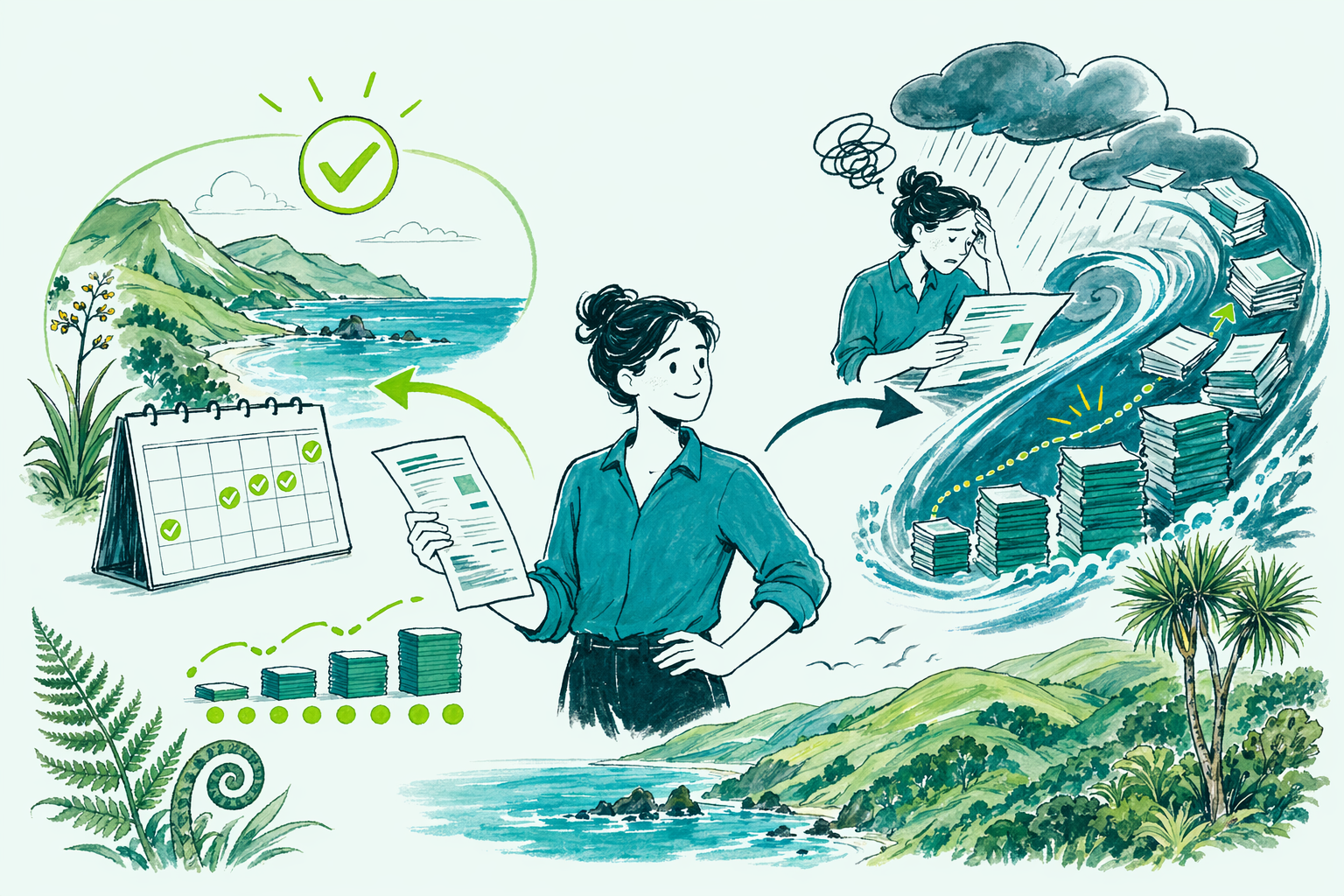
The big advantage of acting early: once an arrangement is agreed and you keep to it, the late-payment penalty regime is paused or reduced, and you avoid the worst of the compounding. Use-of-money interest can still apply, but a plan stops the situation getting worse.
The detail, in plain English
IRD would rather agree a workable plan than chase a debt that never gets paid, so instalment arrangements are common and routine. What IRD looks for:
- A realistic proposal. Instalments you can actually sustain, with a clear end date.
- You stay current. The arrangement covers the existing debt; you are still expected to meet new returns and payments as they fall due.
- Early contact. Asking before the due date (or as soon as you know you cannot pay) is treated far better than going silent.
You can propose weekly, fortnightly or monthly payments, and direct debit is the smoothest way to keep it on track. If your circumstances change, you can usually renegotiate rather than simply defaulting. The one thing that unravels an arrangement is missing payments or letting a new period's tax go unpaid — that can cancel the agreement and reinstate the penalties.
In genuine hardship, IRD has the power to write off some penalties or interest, and occasionally part of the core debt, but that is assessed case by case and is not the starting assumption.
Timing is the lever you control. An arrangement requested before the due date is treated more favourably than one set up after the debt is already overdue, because acting early can reduce or avoid some of the late-payment penalties altogether. The difference between “I rang before it was due” and “I rang three months late” can be real money.
It also helps to come with a number you have actually checked. If unfiled returns sit behind the debt, the true figure may be different — sometimes lower — than the default assessment IRD is chasing. Sorting the returns first means you are negotiating a plan around the right amount rather than an estimate.
A simple example
Suppose you owe $12,000 you cannot pay at once:
| Approach | What happens |
|---|---|
| Ignore the bill | Late-payment penalties plus use-of-money interest keep compounding |
| Agree a 12-month arrangement | About $1,000/month; penalties paused while you keep to it |
The arrangement does not erase the debt, and interest may still tick along, but it stops the penalty stacking that turns a $12,000 problem into a much larger one. Crucially, you also have to keep paying the next period's tax on time, or the plan can fall over.
Common mistakes to avoid
- Going silent. The worst option — penalties and interest compound while nothing is agreed.
- Proposing instalments you cannot keep. A plan you break is worse than a realistic one you sustain.
- Letting new tax fall behind. An arrangement covers the old debt; miss a new return and it can be cancelled.
- Assuming penalties and interest vanish. They are reduced, not always wiped — don't bank on a full write-off.
Finally, treat the arrangement as a floor, not a ceiling. If a good month lets you clear it faster, doing so cuts the interest that keeps accruing on the balance. There is rarely a penalty for paying an arrangement off early.
Where this fits in your return
An instalment arrangement sits after the return and assessment — it is about paying a confirmed debt, not calculating it. It often follows a year where your provisional tax fell short or a catch-up return produced a balance owing. Understanding how penalties and interest work shows exactly why agreeing a plan early saves money.
If you are behind on the returns themselves, that is the disputes, debt and catch-up returns service.
How Fernway can help
We work out the real number you owe, propose an instalment plan IRD will accept and you can actually afford, negotiate it on your behalf, and argue for penalty relief where the facts support it. If you have unfiled returns behind the debt, we sort those first so the arrangement is built on the right figure.
If a tax bill has landed that you cannot pay, book a free 20-minute review before the penalties build.
This is general information only, not personalised tax advice. Your situation may differ, so confirm it with us or check ird.govt.nz.
In plain English: if you can't pay a tax bill in full, ask IRD early for an instalment arrangement, keep the payments realistic and stay current on new tax — that pauses the penalties and stops a manageable debt becoming an unmanageable one.
This is general information, not personalised tax advice.See our full disclaimer.